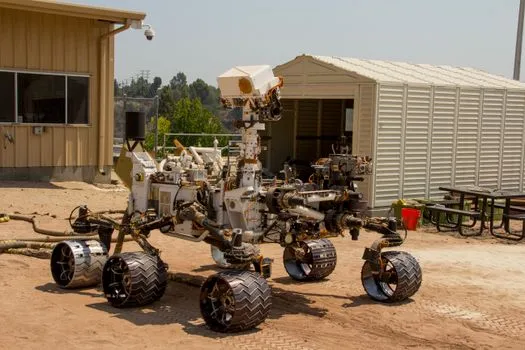
NASA's Perseverance rover has detected complex carbon molecules in rocks on Mars, adding to growing evidence that the planet may have once supported life. The discovery was made in rocks from the Jezero Crater, an ancient lakebed that scientists have been studying for signs of past habitability.
The carbon molecules, known as organic compounds, were found in multiple rock samples collected by the rover. While these compounds can form through non-biological processes, their complexity and abundance in certain rocks raise the possibility of a biological origin. The findings were published in the journal Nature on June 27, 2026.
Scientists emphasize that this is not definitive proof of ancient life, as similar organic molecules can be produced by geological reactions. However, the presence of such complex carbon structures in rocks that were once in contact with water strengthens the case for further investigation. The Perseverance rover is currently collecting samples for a future mission to return them to Earth.