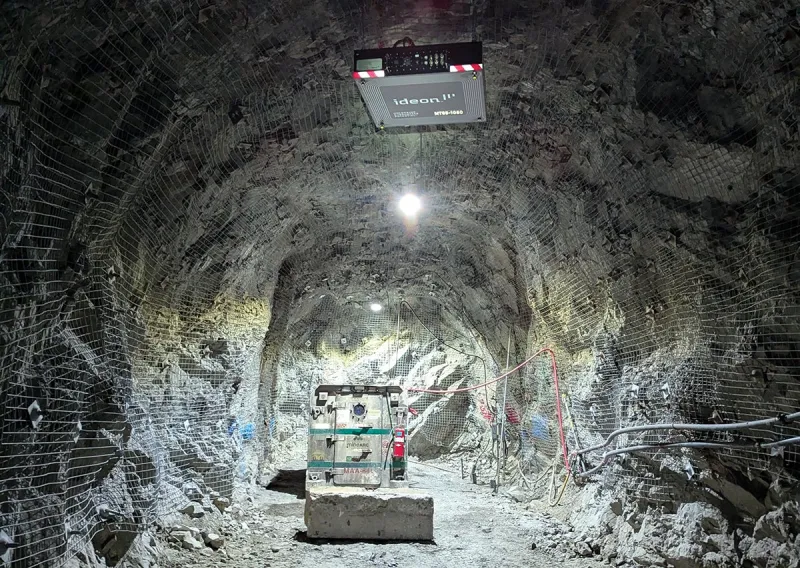
Researchers are harnessing subatomic particles from space, known as cosmic ray muons, to create detailed 3D maps of the Earth's subsurface. This technique, called muon tomography or muography, allows geologists to detect dense mineral deposits, including critical resources like copper, nickel, and lithium, without the need for extensive and invasive drilling.
Muons are produced when cosmic rays collide with Earth's atmosphere. These particles penetrate deep into rock, and by measuring their absorption rates with underground detectors, scientists can infer the density of the material they passed through. Dense ore bodies absorb more muons, creating a detectable shadow in the data. Projects like the COSMA consortium at the University of Birmingham have demonstrated this technology's viability in active mines.
The method offers a more environmentally friendly approach to mineral exploration. By reducing the need for preliminary drill holes, it minimizes landscape disturbance, water use, and carbon emissions associated with traditional exploration. Companies are beginning to adopt the technology to improve discovery efficiency for the energy transition.
While promising, muography has limitations. It requires existing mine shafts or boreholes to place detectors and works best for locating very dense materials over relatively large areas. It is often used in conjunction with other geophysical surveys to provide a clearer picture of potential resources.