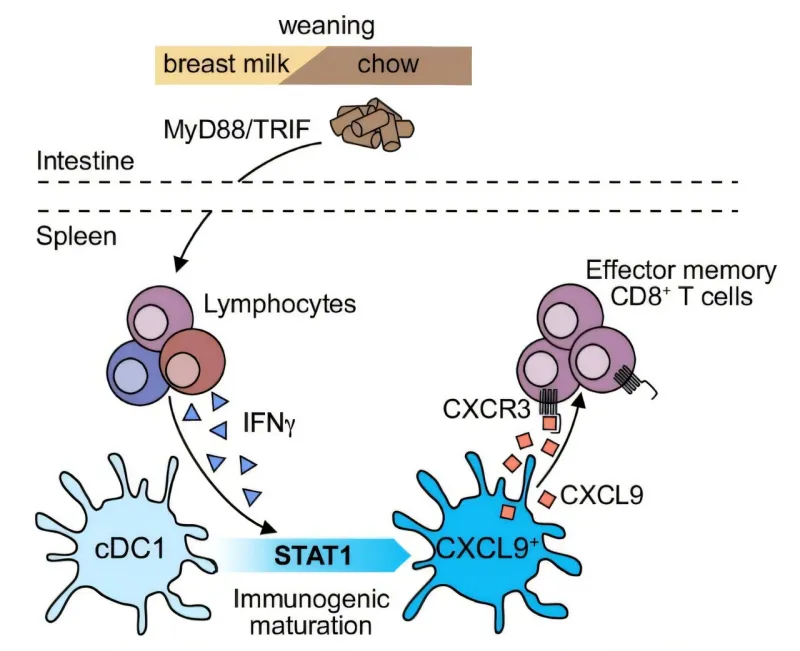
A recent study published in Nature has identified a signaling pathway that may explain how the transition from milk to solid food shapes the development of the immune system in early life. The research, conducted by scientists at the University of California, San Francisco, and the University of Toronto, was published online on July 29, 2026.
The study found that a protein called MyD88, which is part of the innate immune system, plays a critical role in this process. In experiments with mice, the researchers observed that weaning triggers a temporary inflammatory response in the gut, which is mediated by MyD88. This response is essential for the immune system to learn to tolerate food antigens and beneficial microbes, while still being able to fight off pathogens.
According to the study, when MyD88 signaling was disrupted in mice, the animals developed an overactive immune response to food antigens, leading to food allergies. This suggests that the weaning period is a critical window for immune education, and that disruptions in this pathway could contribute to the rise in food allergies in children.
The findings could have implications for understanding and potentially preventing food allergies in humans. The researchers note that further studies are needed to confirm whether the same mechanism operates in humans, but they believe it is likely given the similarities between the mouse and human immune systems.