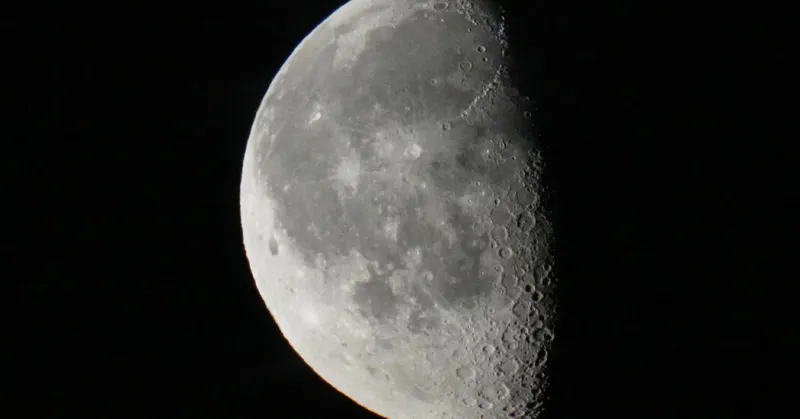
On March 4, 2022, a discarded upper stage of a SpaceX Falcon 9 rocket crashed into the far side of the Moon, as predicted by astronomers. The impact occurred at approximately 7:25 a.m. Eastern Time (12:25 UTC), and the rocket part was traveling at about 5,700 miles per hour (9,200 kilometers per hour).
The rocket stage was originally launched in February 2015 from Cape Canaveral, Florida, carrying the Deep Space Climate Observatory (DSCOVR) satellite. After completing its primary mission, the upper stage was left in a high orbit around Earth and eventually drifted into a trajectory that led to a lunar collision.
Because the impact site was on the far side of the Moon, it was not visible from Earth at the moment of collision. No spacecraft or telescope observed the event directly, but astronomers had tracked the object's trajectory and confirmed the collision using ground-based radar and subsequent observations of the lunar surface.
The event highlighted the growing issue of space debris and the need for better tracking of objects in deep space. While the impact did not pose a threat to Earth, it underscored the importance of responsible disposal of rocket stages to avoid unintended consequences.