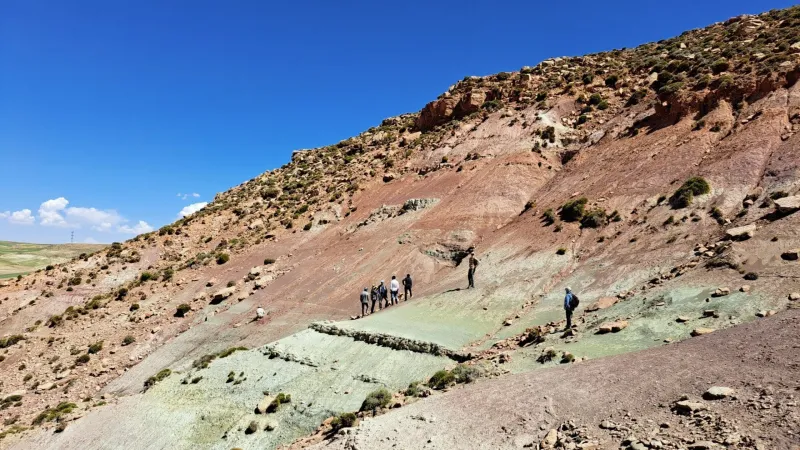
A team of Moroccan researchers has discovered rare fossilized footprints of a lizard-like animal dating back 160 to 170 million years, according to a study published on April 20 in the peer-reviewed journal Historical Biology. The footprints were found in the Middle Atlas region of Morocco, an area known for its rich fossil deposits from the Jurassic period.
The tracks are believed to belong to a prehistoric reptile that resembled modern lizards but lived during the Jurassic era. The discovery provides new insights into the behavior and movement of these ancient creatures, as fossilized footprints are rarer than skeletal remains and offer unique information about locomotion and environment.
Lead researcher Dr. Ahmed Benmoussa of the University of Hassan II in Casablanca stated that the footprints are exceptionally well-preserved, showing clear impressions of toes and claws. The study suggests that the animal was likely small, about the size of a modern gecko, and inhabited a coastal or lakeside environment.
This finding adds to the growing body of evidence about Jurassic biodiversity in North Africa, which was once part of the supercontinent Gondwana. The researchers plan to continue excavations in the area to search for more fossils and footprints that could further illuminate the region's prehistoric life.