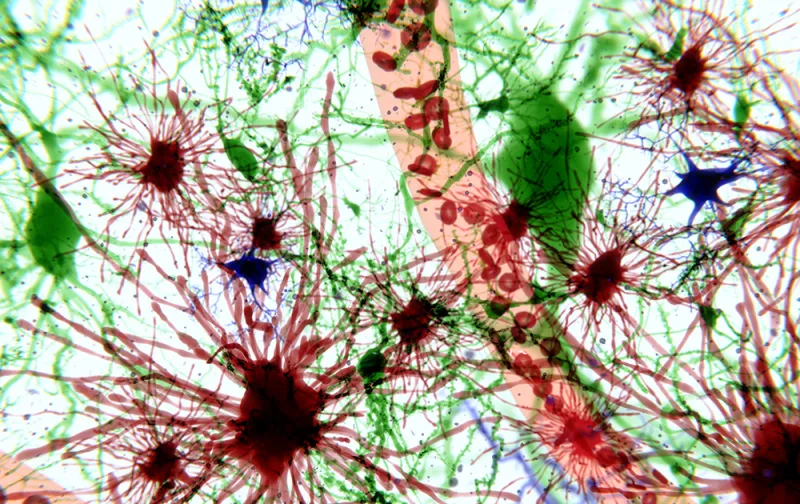
Researchers at NYU Langone Health have discovered that astrocytes, star-shaped glial cells in the brain, form extensive physical networks that connect distant brain regions in mice. The findings, published in the journal Nature, challenge the long-held view that these cells play only a local, supportive role to neurons.
Using advanced viral tracing and microscopy techniques, the team led by Dr. Maiken Nedergaard mapped astrocyte connections. They found that individual astrocytes project long, thread-like extensions that create a vast web, potentially allowing for brain-wide coordination of functions like blood flow, immune response, and information processing.
This discovery of a non-neuronal, long-range network suggests astrocytes may be fundamental to overall brain function and health. The researchers propose this system could be involved in synchronizing brain activity, distributing metabolic resources, or even propagating harmful signals in neurological diseases.
While the study was conducted in mice, the presence of similar astrocyte networks in humans is a key question for future research. Understanding this "astrocyte connectome" could open new avenues for treating disorders like Alzheimer's disease, epilepsy, and stroke, where astrocyte dysfunction is implicated.