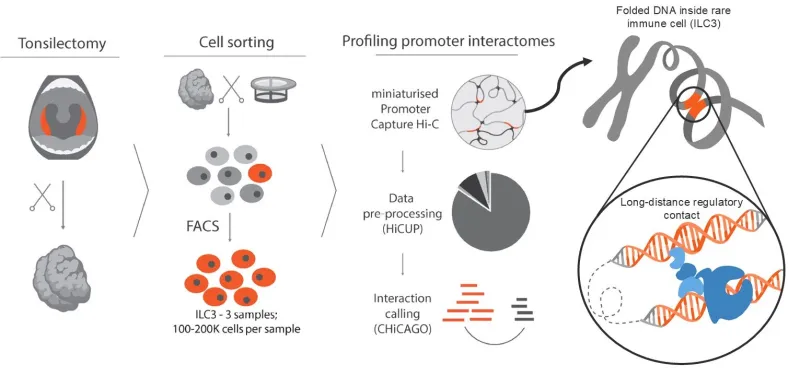
Researchers have developed a new method to study genetic risk in rare immune cells, which were previously difficult to analyze due to their scarcity. The approach, described in a recent study, allows scientists to identify how genetic variants linked to diseases act on genes located far away in the DNA sequence, rather than on nearby genes.
The method, called 'single-cell expression quantitative trait loci (eQTL) analysis,' was applied to specific immune cell types such as regulatory T cells and natural killer cells. By isolating these rare cells, the researchers could map genetic variants to their target genes, providing insights into autoimmune and inflammatory diseases.
According to the study, this technique revealed that many disease-associated variants influence gene expression in a cell-type-specific manner, which was previously hidden when analyzing mixed cell populations. The findings could lead to better understanding of disease mechanisms and potential therapeutic targets.
The research was published in a peer-reviewed journal, and the team has made their data publicly available for other scientists. This advancement is expected to accelerate genetic research in immunology and precision medicine.