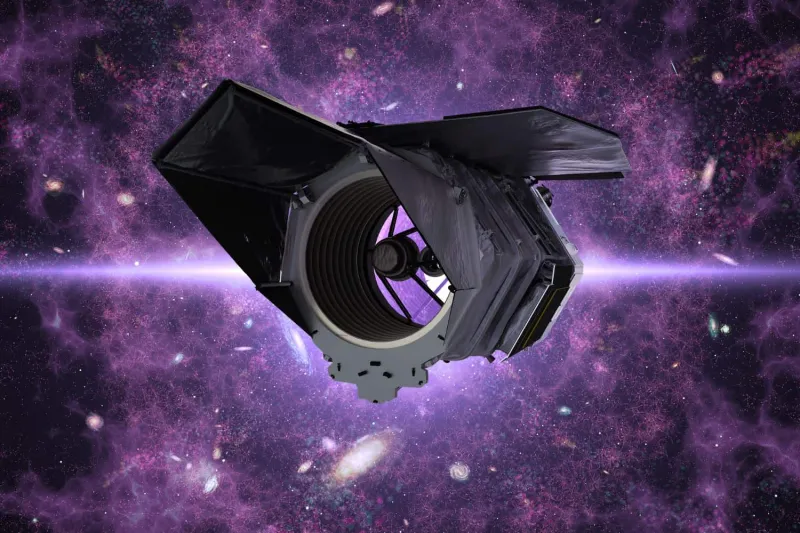
NASA's Nancy Grace Roman Space Telescope, formerly known as WFIRST, is scheduled to launch no later than May 2027. The mission aims to address fundamental questions about dark energy, dark matter, and exoplanets.
The telescope features a 2.4-meter primary mirror, the same size as the Hubble Space Telescope, but with a field of view 100 times larger. This wide-field capability will allow Roman to survey large areas of the sky quickly, mapping the distribution of galaxies and measuring the effects of dark energy on cosmic expansion.
Roman will also conduct a microlensing survey to detect thousands of exoplanets, including some that are Earth-sized and located in the habitable zones of their stars. The mission is expected to discover about 2,600 exoplanets, according to NASA estimates.
In addition to its primary goals, Roman will study the formation of the universe's first stars and galaxies, and investigate the nature of dark matter through gravitational lensing. The telescope is named after Nancy Grace Roman, NASA's first chief astronomer, who played a key role in the development of the Hubble Space Telescope.