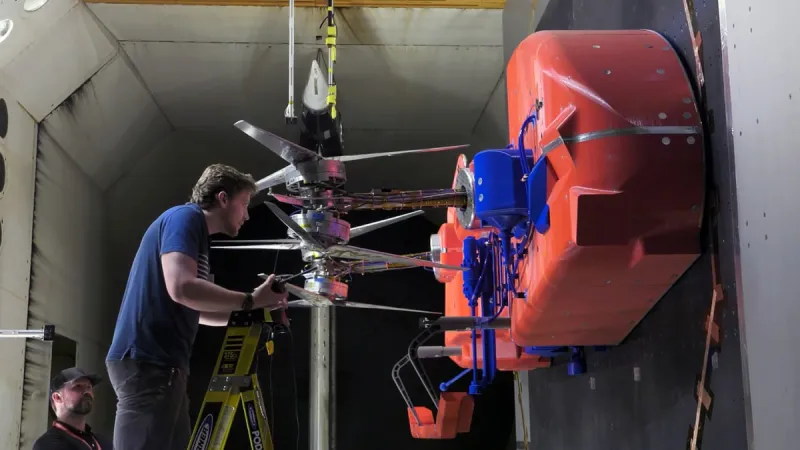
NASA's Dragonfly mission, a rotorcraft designed to explore Saturn's moon Titan, is moving forward with assembly of its honeycomb panels for the main body. Unlike traditional rovers, Dragonfly uses eight rotors to fly through Titan's thick atmosphere, allowing it to cover more ground than wheeled vehicles.
The mission, part of NASA's New Frontiers program, is scheduled to launch in 2027 and arrive at Titan in 2034. Titan's dense atmosphere and low gravity make flight feasible, and Dragonfly will study prebiotic chemistry and potential habitability.
According to NASA, the honeycomb panels are being assembled at the Johns Hopkins Applied Physics Laboratory. The rotorcraft will carry instruments to analyze surface composition and search for signs of life.