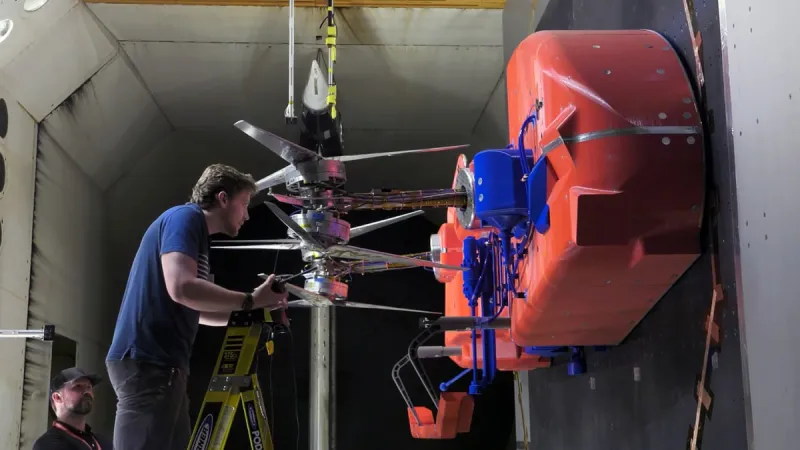
La mission Dragonfly de NASA, un rotorcraft conçu pour explorer Titan, lune de Saturne, progresse avec l'assemblage de ses panneaux en nid d'abeille pour le corps principal. Contrairement aux rovers traditionnels, Dragonfly utilise huit rotors pour voler dans l'atmosphère dense de Titan, lui permettant de couvrir plus de terrain.
La mission, faisant partie du programme New Frontiers de NASA, est prévue pour un lancement en 2027 et une arrivée sur Titan en 2034. L'atmosphère dense et la faible gravité de Titan rendent le vol possible, et Dragonfly étudiera la chimie prébiotique et l'habitabilité potentielle.
Selon NASA, les panneaux en nid d'abeille sont assemblés au Johns Hopkins Applied Physics Laboratory. Le rotorcraft transportera des instruments pour analyser la composition de la surface et rechercher des signes de vie.