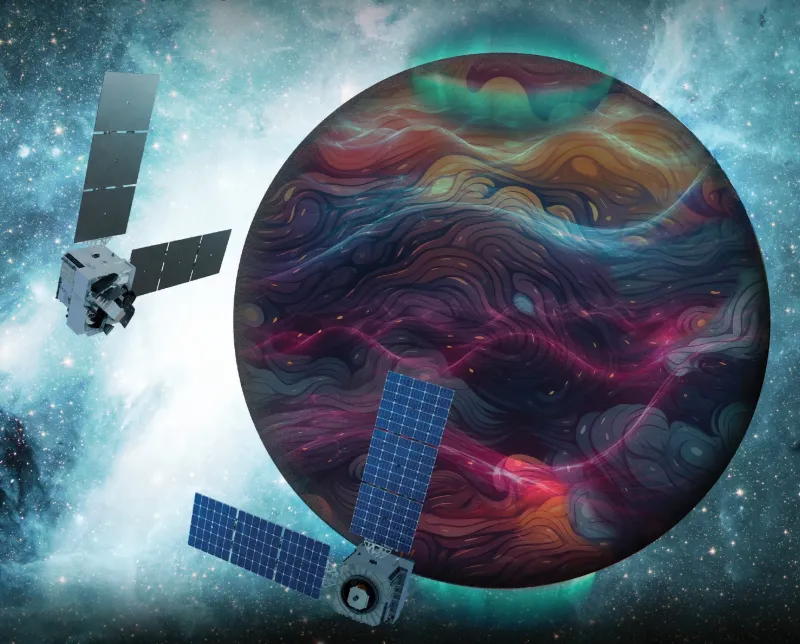
NASA has selected the DAPHNE mission for further development, aiming to improve space weather forecasting by studying how Earth's atmosphere interacts with the space environment. The mission, whose full name is Dynamics and Atmosphere of the Plasmasphere-Helium Environment, will focus on understanding processes deep within the atmosphere that affect space weather.
DAPHNE is part of NASA's Heliophysics Explorers Program and was chosen after a competitive review. The mission will use a small satellite to measure helium ions in the plasmasphere, a region of charged particles surrounding Earth. This data will help scientists predict space weather events that can disrupt satellites, communications, and power grids.
The mission is expected to launch no earlier than 2028, pending final approval and funding. NASA officials stated that DAPHNE will provide critical insights into the coupling between Earth's lower atmosphere and the space environment, a key area for improving forecast models.