West Africa's pre-colonial history was profoundly shaped by several powerful and influential empires. Among the most significant were the Ghana Empire (c. 300–1100 CE), the Mali Empire (c. 1235–1670 CE), the Songhai Empire (c. 1464–1591 CE), and the Oyo Empire (c. 1400–1835 CE). These states were major centers of trade, culture, and political power.
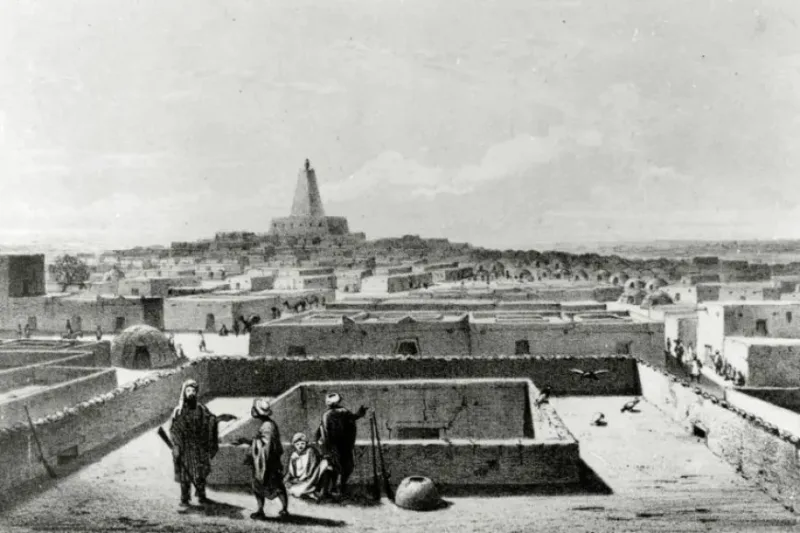
The Ghana Empire, located in present-day southeastern Mauritania and western Mali, grew wealthy by controlling trans-Saharan trade routes for gold and salt. It was succeeded by the Mali Empire, which under rulers like Mansa Musa (c. 1312–1337 CE) became renowned for its immense wealth, with Timbuktu emerging as a major center of Islamic scholarship and commerce.
The Songhai Empire, centered on the Niger River, became the largest of the three Sahelian empires at its peak under Askia Muhammad (c. 1493–1528 CE). It expanded Mali's administrative systems and continued to foster trade and learning. Further south, the Oyo Empire, based in what is now southwestern Nigeria, developed into a powerful Yoruba state known for its sophisticated political structure and cavalry, dominating regional trade until the early 19th century.
The legacies of these empires are evident in the cultural, linguistic, and political landscapes of modern West Africa. Their histories of centralized administration, economic prowess, and intellectual achievements counter earlier narratives that overlooked Africa's complex pre-colonial civilizations.