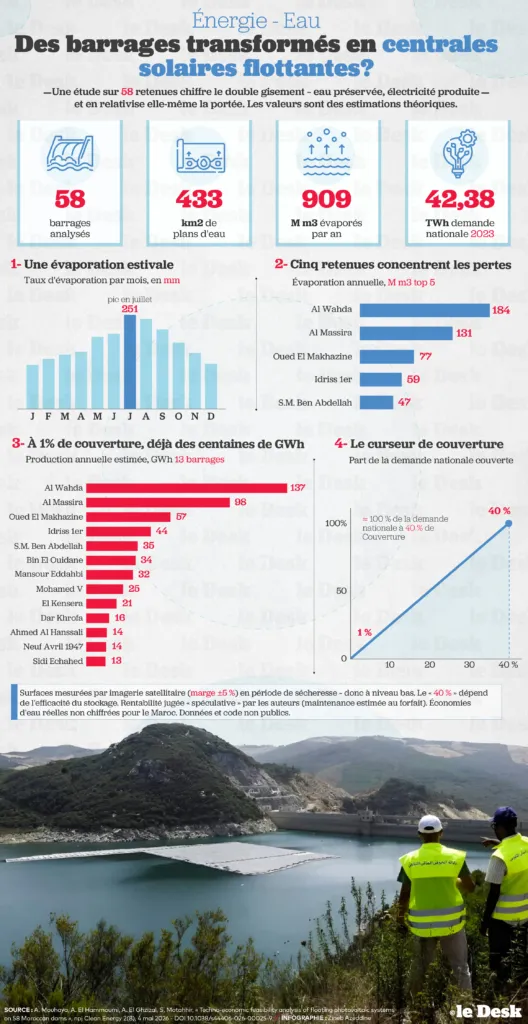
A new study has assessed the potential of floating photovoltaic (FPV) systems on Morocco's major dams, suggesting that even covering just 1% of their surface area could provide a notable contribution to the national electricity grid. The research, conducted by Moroccan and international scientists, indicates that in theory, covering 40% of these dam surfaces could meet a substantial portion of the country's electricity demand.
However, the study does not shy away from highlighting significant uncertainties. Key factors such as water evaporation rates, the impact on aquatic ecosystems, and the structural integrity of floating installations on reservoirs with fluctuating water levels remain poorly understood. The authors emphasize that these variables could affect both energy output and environmental sustainability.
Morocco, which already leads in renewable energy in North Africa with its Noor Ouarzazate solar complex, sees floating solar as a way to utilize existing water infrastructure without occupying scarce land. The country aims to generate 52% of its electricity from renewables by 2030.
The study calls for pilot projects to gather real-world data on performance and environmental effects before large-scale deployment. Researchers stress that while the theoretical potential is promising, practical implementation requires careful site-specific assessments.