The Dark Energy Spectroscopic Instrument (DESI), an international collaboration involving researchers from institutions including the University of St Andrews, has created the largest three-dimensional map of the universe ever constructed. This unprecedented survey measures the positions and distances of millions of galaxies and quasars, tracing the universe's structure across 11 billion years of cosmic history.
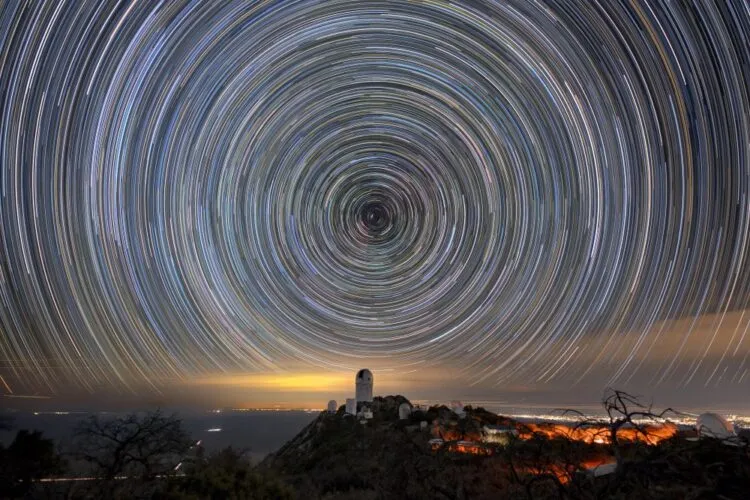
Mounted on the Nicholas U. Mayall 4-meter Telescope at Kitt Peak National Observatory in Arizona, DESI has cataloged over 30 million galaxies and quasars since beginning its five-year survey in 2021. The map reveals the cosmic web in extraordinary detail, showing dense clusters of galaxies and vast, empty voids.
The primary scientific goal of DESI is to investigate the nature of dark energy, the mysterious force driving the accelerated expansion of the universe. By precisely measuring how the universe has expanded over time, scientists aim to determine if dark energy's strength has remained constant or changed, which would have profound implications for our understanding of fundamental physics.
Early results from the DESI data, released in 2024 and 2025, have already provided some of the most precise measurements of the universe's expansion rate to date. The full five-year survey is expected to yield even more precise data, potentially challenging current cosmological models and offering new insights into the fate of the cosmos.