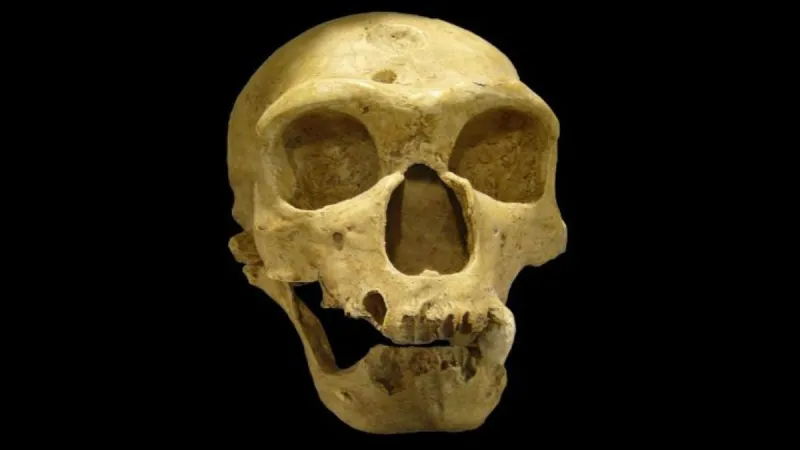
Recent brain scans have revealed surprising insights into Neanderthal intelligence, challenging long-held assumptions about their cognitive abilities. A study published in 2023 in Nature Ecology & Evolution analyzed endocranial casts of Neanderthals and modern humans, finding that Neanderthals had larger cerebellar regions relative to brain size. The cerebellum is associated with cognitive functions such as language, memory, and social cognition.
Researchers used computed tomography (CT) scans to create virtual reconstructions of Neanderthal braincases from fossils found in Europe and Asia. They compared these with scans of modern humans from archaeological and contemporary samples. The results indicated that Neanderthals had a more elongated brain shape, with a larger cerebellum, which may have supported complex social and cultural behaviors.
This finding contradicts earlier views that Neanderthals were less intelligent than modern humans. Instead, it suggests that Neanderthals possessed cognitive capabilities similar to those of early Homo sapiens. The study's lead author, Dr. Emiliano Bruner of the Centro Nacional de Investigación sobre la Evolución Humana in Spain, noted that the cerebellar differences could reflect adaptations to different environments or social structures.
The research adds to a growing body of evidence that Neanderthals engaged in symbolic behavior, such as creating cave art and using ornaments, which were once thought to be unique to modern humans. However, the exact implications of the brain structure differences remain debated among scientists.