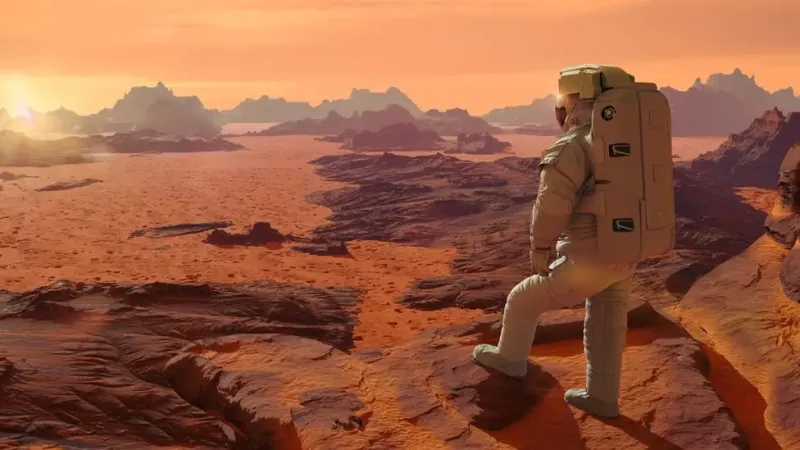
Mars has a thin atmosphere composed primarily of carbon dioxide (about 95%), with only trace amounts of oxygen (approximately 0.13%). For comparison, Earth's atmosphere contains about 21% oxygen. This makes the Martian air unbreathable for humans without technological intervention.
NASA's Perseverance rover, which landed on Mars in February 2021, carries an instrument called MOXIE (Mars Oxygen In-Situ Resource Utilization Experiment). MOXIE successfully demonstrated the ability to extract oxygen from Martian CO2, producing about 10 grams of oxygen per hour. This technology could be scaled up to support human missions.
For a crew of four to survive on Mars, NASA estimates that about 25 metric tons of oxygen would be needed over a two-year period. This includes oxygen for breathing and for rocket propellant to return to Earth. Current plans involve using MOXIE-like devices to generate oxygen from the atmosphere.
Other challenges include the low atmospheric pressure (about 0.6% of Earth's), which would cause bodily fluids to boil without a pressurized suit, and the lack of a magnetic field, exposing the surface to harmful solar and cosmic radiation. Any human habitat would need to be pressurized, shielded, and equipped with life support systems.
While Mars has abundant carbon dioxide, the process of extracting oxygen is energy-intensive. Future missions would likely rely on nuclear power or large solar arrays to run oxygen generators. Despite these hurdles, the MOXIE experiment proves that producing breathable air on Mars is technically feasible.