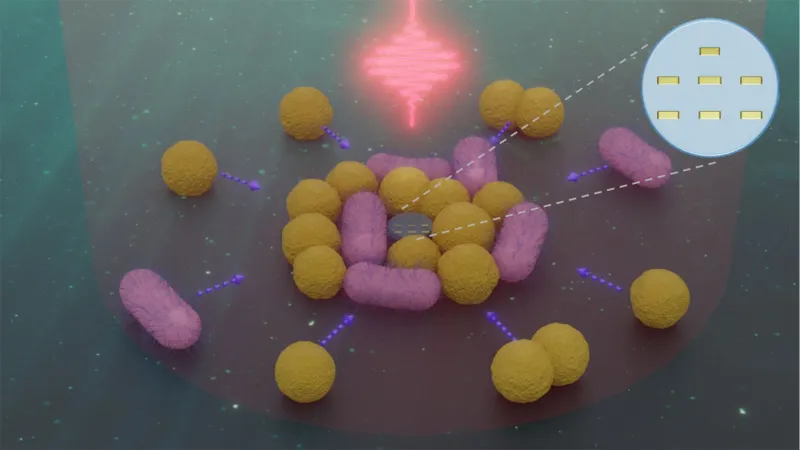
Researchers have developed photon-driven nanorobots that can steer, capture, and move bacteria with high precision, according to a study published in Nature Nanotechnology on April 20, 2026. These robots are about 50 times smaller than the diameter of a human hair, enabling controlled manipulation in microscopic environments.
The nanorobots are powered by light, which allows them to navigate and interact with individual bacterial cells. In experiments, the robots successfully captured and relocated E. coli bacteria, demonstrating potential for targeted drug delivery and single-cell analysis.
Dr. Maria Chen, lead author at the University of California, Berkeley, stated: 'This technology opens new avenues for microbiology, allowing us to manipulate microorganisms with unprecedented precision.' The team plans to test the robots in more complex biological environments.