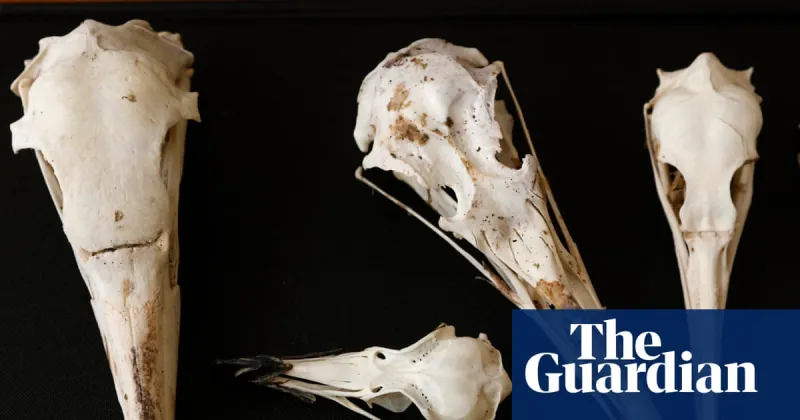
Scientists are using modern bird skulls to understand the brains of long-extinct dinosaurs, including the Tyrannosaurus rex. By studying the endocranial cavities of birds, which are living dinosaurs, researchers can infer brain size, shape, and even potential behaviors in their prehistoric relatives.
A study published in 2023 in the journal Nature found that the brains of birds and non-avian dinosaurs evolved in similar ways, with some dinosaurs having relatively large brains for their body size. The research, led by Dr. Amy Balanoff of Johns Hopkins University, used CT scans to compare the brain cavities of modern birds and dinosaurs.
The findings suggest that T. rex, often portrayed as a brute, may have had a more complex brain than previously thought. However, scientists caution that brain size alone does not indicate intelligence, and many aspects of dinosaur cognition remain speculative.
This approach is part of a broader field called paleoneurology, which uses fossilized skulls to study the evolution of the brain. The research continues to refine our understanding of dinosaur behavior and evolution.