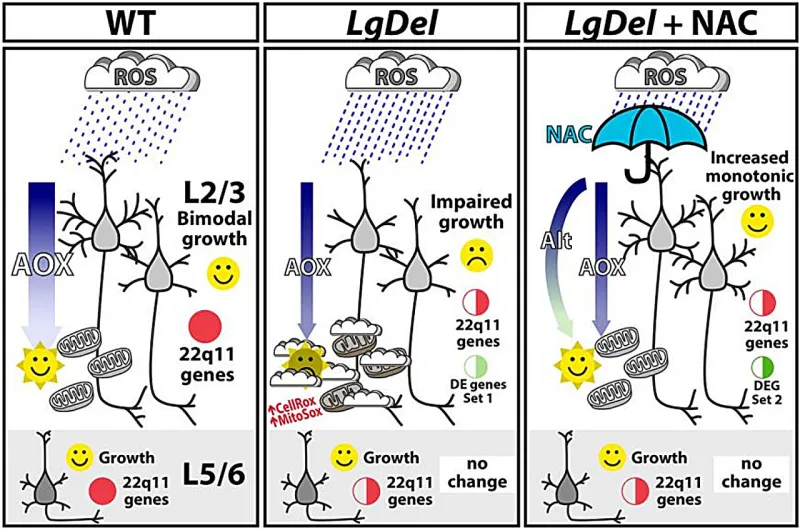
Scientists at Virginia Tech's Fralin Biomedical Research Institute at VTC have discovered how an experimental therapy can help brain cells overcome the effects of a disease-causing genetic deletion. The study, published in the journal Nature Communications on July 28, 2026, focuses on a deletion in the SHANK3 gene, which is linked to autism spectrum disorder and Phelan-McDermid syndrome.
Instead of repairing the deletion itself, the therapy uses a small molecule to boost the activity of a related gene, SHANK2, which can compensate for the loss. In laboratory experiments with human neurons derived from stem cells, the treatment restored normal growth of dendrites and synapses, the connections that allow brain cells to communicate.
Lead researcher Dr. Anthony-Samuel LaMantia, professor at the Fralin Biomedical Research Institute, said: 'This approach doesn't fix the genetic deletion, but it gives the cells a workaround to restore healthy function.' The team tested the molecule on neurons from patients with Phelan-McDermid syndrome, observing a 40% increase in synaptic density after treatment.
The findings offer a potential new strategy for treating neurodevelopmental disorders caused by genetic deletions, though further animal studies and clinical trials are needed before human use. The research was funded by the National Institutes of Health and the Commonwealth of Virginia.