The James Webb Space Telescope (JWST) has identified a population of massive, mature galaxies in the early universe, existing just 500 to 700 million years after the Big Bang. These findings, based on data from the JWST Advanced Deep Extragalactic Survey (JADES) and other programs, were published in a series of papers in early 2026. The galaxies appear to have already formed a significant number of stars, with masses comparable to the Milky Way, contradicting previous assumptions that such structures took billions of years to develop.
According to a study led by researchers at the University of Texas at Austin and the University of Geneva, the galaxies exhibit low levels of star formation for their epoch, suggesting they are already 'quenched' or dormant. This maturity implies that galaxy formation and evolution occurred much faster than standard cosmological models predict. The JWST's infrared capabilities allow it to peer through cosmic dust and observe these distant objects, which are redshifted due to the expansion of the universe.
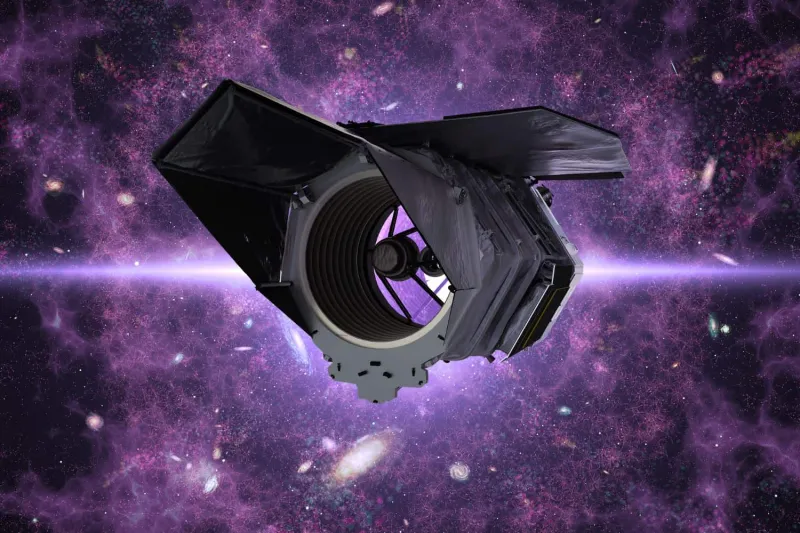
Scientists are now re-evaluating theories of dark matter and galaxy assembly. The discovery has sparked debate about whether the early universe contained more gas or different physical processes that accelerated star formation. Future observations with JWST and the upcoming Nancy Grace Roman Space Telescope are expected to provide further insights into these unexpected findings.