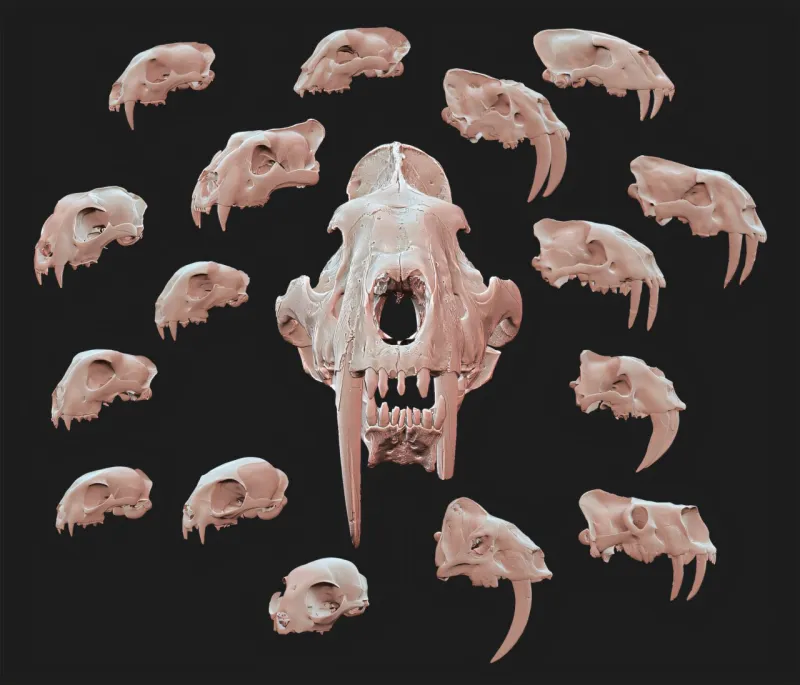
A fossil stored in a museum drawer and labeled only as 'feline' has been identified as a new species of saber-toothed cat that lived in North America more than 5 million years ago. The discovery was made by a paleontologist at the University of California, Berkeley, who re-examined the specimen as part of a broader study of ancient carnivores.
The fossil, which includes parts of the skull and teeth, was originally collected decades ago and had been overlooked due to its incomplete nature. The new analysis revealed distinct features in the teeth and jaw that set it apart from other known saber-toothed cats, placing it in a previously unknown genus.
This finding sheds light on the evolutionary history of saber-toothed cats, a group that includes the well-known Smilodon. The newly identified species is among the oldest known from North America, suggesting that these predators were more diverse and widespread in the continent's ancient ecosystems than previously thought.
The research was published in a peer-reviewed journal and highlights the importance of re-examining museum collections, which often hold undiscovered treasures. The fossil is now housed at the University of California Museum of Paleontology.