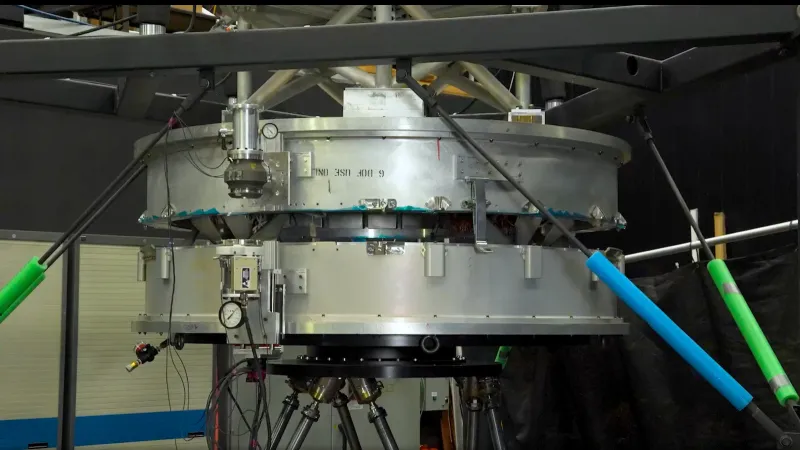
NASA is advancing its in-orbit refueling technology with tests of a new cryocoupler, a device designed to transfer cryogenic propellants between spacecraft in space. This development is crucial for future deep space missions, such as those to the Moon and Mars, where refueling in orbit could enable longer journeys and reduce launch costs.
The cryocoupler, developed by American company, is being tested at NASA's Glenn Research Center. The tests aim to validate its ability to handle the extreme temperatures and pressures of cryogenic fluids like liquid hydrogen and oxygen, which are essential for rocket propulsion.
In-orbit refueling has been a long-term goal for NASA, as it allows spacecraft to top up their fuel tanks after launch, potentially extending mission durations and enabling more ambitious exploration. The cryocoupler is a critical component of this infrastructure, ensuring safe and efficient transfer of propellants in the vacuum of space.
According to NASA, successful testing of the cryocoupler could lead to its integration into future missions, including the Artemis program, which aims to return humans to the Moon. The technology also has implications for commercial spaceflight and satellite servicing.