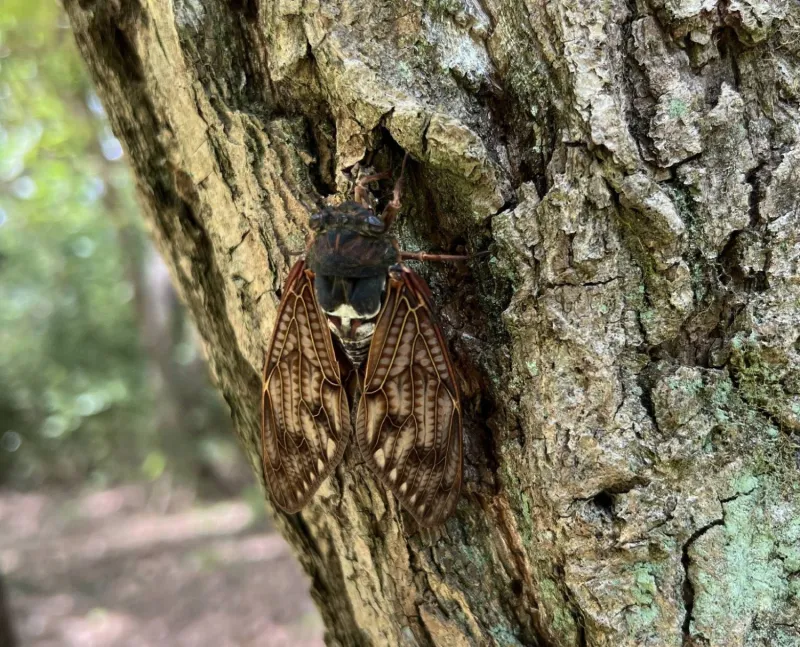
New research from Japan reveals that urbanization, particularly artificial light and higher nighttime temperatures, is causing some cicada species to sing after dark. The study, published in the journal Ecology in July 2026, focused on the robust cicada (Hyalessa maculaticollis) in Tokyo and surrounding areas.
Researchers from the University of Tokyo and other institutions found that in areas with intense city lights and temperatures above 25°C (77°F), cicadas were more likely to continue their mating calls well into the night. Typically, these insects are diurnal, but the combination of light pollution and urban heat islands appears to disrupt their circadian rhythms.
The team used acoustic monitoring and temperature sensors across 30 sites in the Tokyo metropolitan area. They recorded a significant increase in nighttime singing in urban parks and green spaces compared to rural forests. Lead author Dr. Yuki Tanaka stated, 'Our data show that the urban environment is creating a new nocturnal niche for these cicadas.'
This behavioral shift could have ecological consequences, including altered predator-prey dynamics and potential impacts on reproduction. The researchers plan to expand the study to other cities in Asia to see if the pattern holds across different cicada species.