NASA's Cassini spacecraft, which explored Saturn and its moons from 2004 to 2017, observed transient bright features in Titan's northern methane seas, such as Kraken Mare and Ligeia Mare. These features, nicknamed 'magic islands,' appeared and disappeared in radar images, puzzling scientists.
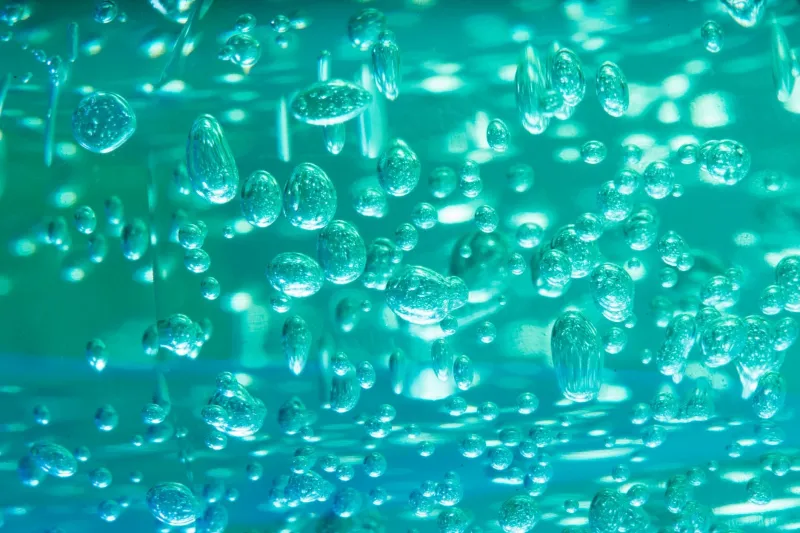
Recent laboratory experiments, published in Geophysical Research Letters in 2024, have provided a plausible explanation. Researchers at NASA's Jet Propulsion Laboratory simulated Titan's conditions and found that nitrogen gas can form bubbles in liquid methane, creating bright patches that mimic islands.
These bubbles form when nitrogen, dissolved in the cold methane seas, comes out of solution due to temperature or pressure changes. The study suggests that seasonal shifts on Titan could trigger these bubble fields, explaining the transient nature of the 'magic islands.'
This finding resolves a decade-old mystery from Cassini's mission and highlights the dynamic processes on Titan, a moon with a thick atmosphere and liquid hydrocarbon cycles similar to Earth's water cycle.