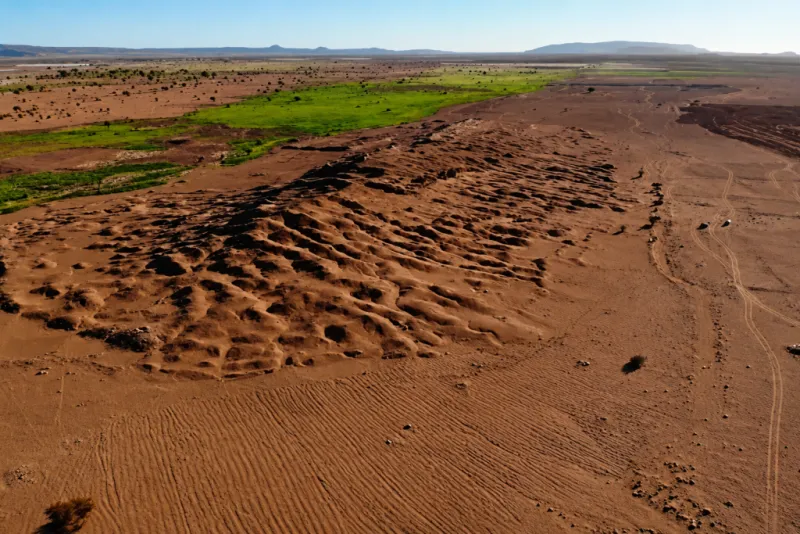
A new study led by the Cyprus Institute, in collaboration with the British Museum and Morocco's National Institute of Archaeological Sciences and Heritage (INSAP), has confirmed that the medieval site of Tamdult in southern Morocco served as a major metallurgical center for trans-Saharan trade.
Published on July 20, 2026, the research used advanced archaeometric techniques to analyze slag and metal artifacts from the site. The findings reveal that Tamdult was a hub for copper and brass production, with evidence of large-scale smelting activities dating from the 8th to the 15th centuries.
The study highlights Tamdult's role in supplying metal goods to West African empires, such as Ghana and Mali, in exchange for gold, salt, and slaves. This trade network was crucial to the medieval economy of North and West Africa.
Dr. Maria Papadopoulos of the Cyprus Institute stated, 'Our analysis shows that Tamdult was not just a small village but a significant industrial center that fueled trans-Saharan commerce.' The research also indicates that the site's metallurgical technology was advanced for its time, including the use of crucible steel.