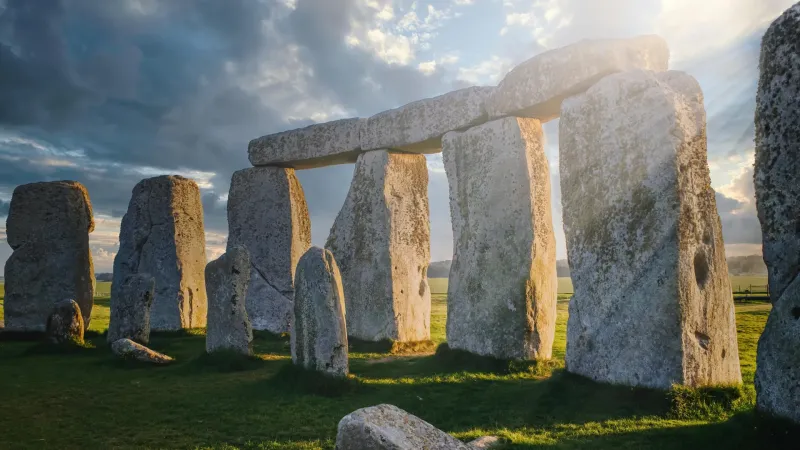
A recent study led by researchers from Sheffield Hallam University and Curtin University in Australia proposes that the six-ton Altar Stone at Stonehenge may have been transported from Scotland to Salisbury Plain by a glacier during the last ice age, rather than by human effort. The research, published in the journal Quaternary Science Reviews, used computer simulations of ancient ice sheets to track the possible path of the stone.
The simulations indicate that ice flowing from the Orcadian Basin in northeast Scotland could have carried the stone southwards, depositing it as far as the Dogger Bank area in the North Sea. From there, subsequent glacial advances or other natural processes might have moved it further south to the vicinity of Stonehenge. This challenges the long-held assumption that Neolithic people quarried and moved the stone over 700 kilometres.
However, the study does not rule out human transport. The researchers emphasise that their model shows a plausible natural pathway, but direct evidence of the stone's journey remains elusive. The Altar Stone is unique among Stonehenge's bluestones, which are known to have been brought from Wales, likely by humans. Its Scottish origin was confirmed in 2024 through mineralogical analysis.
Archaeologists and geologists continue to debate the stone's origins. While the glacier hypothesis offers a new perspective, many experts still favour human agency, given the lack of glacial deposits in the immediate area of Stonehenge. Further research, including fieldwork and dating of sediments, is needed to resolve the mystery.