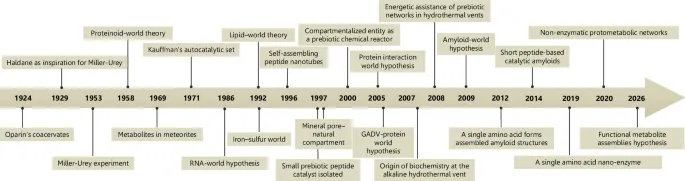
A new hypothesis regarding the early events in the origin of life has been proposed, challenging the long-standing RNA world hypothesis. The RNA world hypothesis posits that self-replicating RNA molecules were the first step toward life, but details about the transition from chemistry to biology remain debated. The new hypothesis, termed the functional abiotic metabolite assembly hypothesis, suggests that simple abiotic metabolites may have assembled into functional networks before the emergence of RNA.
According to the hypothesis, early Earth environments could have produced a variety of small organic molecules through geochemical processes. These metabolites might have interacted to form primitive metabolic cycles that were capable of harnessing energy and synthesizing more complex compounds. This pre-RNA stage could have provided a scaffold for the later emergence of RNA-based replication.
Proponents argue that this hypothesis addresses some of the challenges facing the RNA world, such as the difficulty of synthesizing RNA under prebiotic conditions and the need for a functional role before replication. However, the idea is not without controversy, and further experimental evidence is needed to support it.
Researchers emphasize that understanding the origin of life requires interdisciplinary approaches, combining chemistry, geology, and biology. The functional abiotic metabolite assembly hypothesis adds a new perspective to the ongoing debate, but it does not yet replace the RNA world as the leading theory.