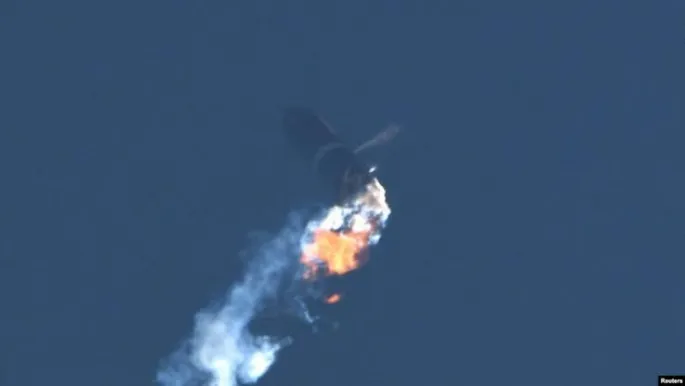
On July 25, 2026, a SpaceX Starship prototype crashed during a high-altitude test flight at the company's Boca Chica facility in Texas. The vehicle, designated SN15, experienced a failure during its landing burn, resulting in a fireball upon impact. No injuries were reported, as the test was conducted on an uncrewed vehicle.
SpaceX CEO Elon Musk stated on social media that the crash was caused by a 'fuel pressure anomaly' and that the team is already working on fixes. This incident marks the fourth consecutive failure of a Starship prototype to land successfully, following similar crashes in December 2020, February 2021, and March 2021.
The Starship program, which aims to develop a fully reusable spacecraft for missions to the Moon and Mars, has faced repeated setbacks. However, Musk has emphasized that each failure provides valuable data for rapid iteration. The company has already built multiple new prototypes at its Texas facility, with SN16 and SN17 nearing completion.
Industry analysts note that while the crashes raise concerns about safety and cost—each prototype is estimated to cost tens of millions of dollars—the approach is consistent with SpaceX's 'fail fast, learn fast' philosophy. The company has a history of overcoming early failures, as seen with its Falcon 1 and Falcon 9 rockets.
NASA, which has awarded SpaceX a $2.9 billion contract for the Human Landing System (HLS) to land astronauts on the Moon, is monitoring the Starship development closely. The agency has stated that it expects SpaceX to meet safety milestones before any crewed missions.