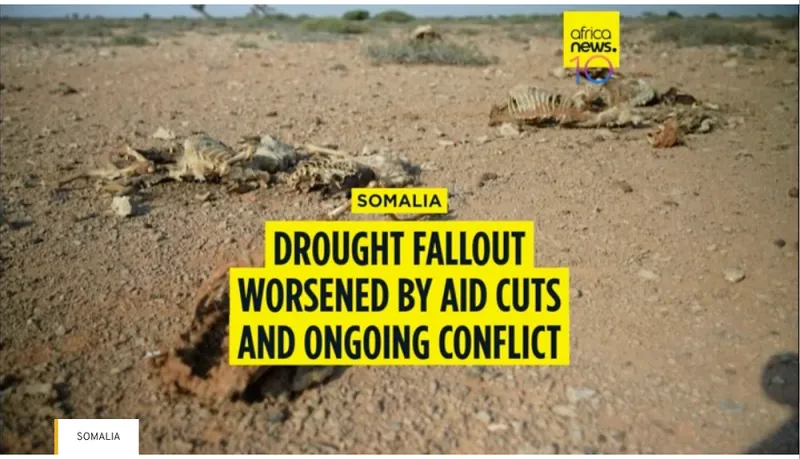
In the largely arid Puntland region in north-eastern Somalia, where the past three rainy seasons have failed, there is nothing to see but dry water ponds, destroyed crops, and animal carcasses. As the drought intensifies, malnutrition rates are rising sharply, with reports indicating that over 1.5 million children under five are at risk of acute malnutrition by mid-2026, according to the UN Office for the Coordination of Humanitarian Affairs (OCHA).
The crisis is compounded by significant cuts in international aid. In early 2026, several major donors reduced funding for Somalia due to global economic pressures and competing humanitarian crises. The UN's 2026 Humanitarian Response Plan for Somalia, which requires $2.6 billion, is only 25% funded as of May 2026, leaving critical programs for food, water, and health services underfunded.
Ongoing conflict between the Somali government and the al-Shabaab militant group has further exacerbated the situation. Clashes in central and southern Somalia have displaced over 300,000 people since January 2026, according to the UN Refugee Agency (UNHCR). Many of these displaced families have moved to drought-affected areas, straining already scarce resources.
Local authorities in Puntland report that water prices have tripled in some areas, and livestock mortality rates have reached 40% in the worst-affected districts. The Famine Early Warning Systems Network (FEWS NET) warns that without immediate and sustained aid, parts of Somalia could face famine conditions by September 2026.