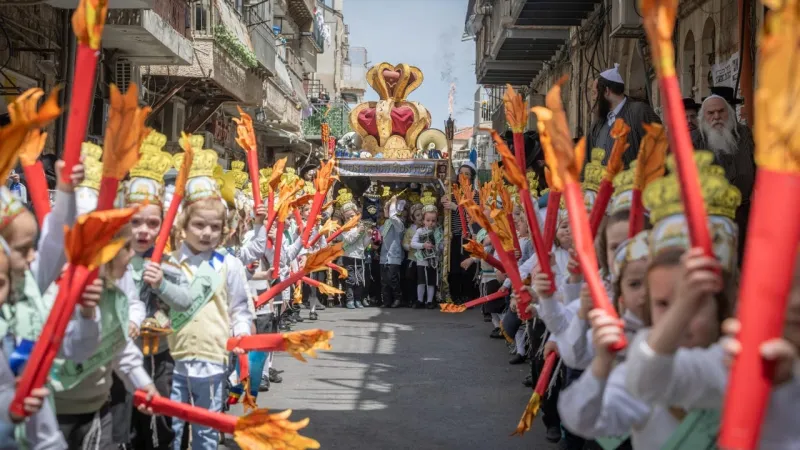
Shavuot, the Jewish festival of weeks, is observed on the 6th of Sivan, which in 2026 falls on May 21-22. The holiday has a dual significance: it commemorates the giving of the Torah at Mount Sinai, as described in the Book of Exodus, and it is also an agricultural festival marking the wheat harvest in the Land of Israel, as outlined in Leviticus 23:15-21.
Historically, after the destruction of the Second Temple in 70 CE, the agricultural aspects of Shavuot diminished among the Jewish diaspora, and the holiday became primarily associated with the revelation at Sinai. The tradition of eating dairy foods on Shavuot, such as cheesecake and blintzes, has several explanations, including the idea that the Israelites, having just received the Torah, did not yet have kosher meat available.
With the establishment of the State of Israel in 1948 and the return of Jews to their ancestral homeland, the agricultural dimension of Shavuot was revived. Kibbutzim and moshavim across Israel hold harvest festivals, bringing the first fruits (bikkurim) to Jerusalem, echoing the ancient pilgrimage described in the Torah. This reconnection with the land has given Shavuot a renewed layer of meaning, linking the biblical past with modern Israeli life.