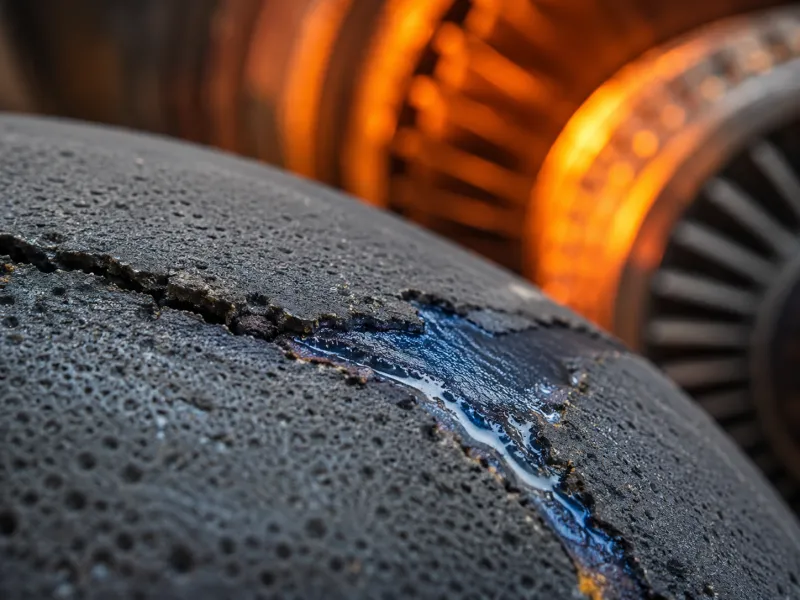
Researchers have developed a self-healing ceramic coating that can seal cracks in turbine blades at temperatures up to 800°C, according to a study published in a peer-reviewed journal. The coating, inspired by natural glaze layers found in cobalt superalloys, uses cobalt oxide migration to fill cracks and limit spallation, protecting extreme-environment engine components from heat-driven damage.
The study, titled 'Glaze-enabled self-healing ceramic coatings for extreme environments,' was conducted by a team from the University of Cambridge and other institutions. The coating is designed for use in gas turbines, which operate at high temperatures and are prone to cracking due to thermal stress. The self-healing mechanism relies on the formation of a cobalt oxide glaze that flows into cracks and solidifies, restoring the coating's integrity.
In tests, the coating demonstrated the ability to heal cracks up to 0.5 mm wide within 10 minutes at 800°C. The researchers noted that the coating could extend the lifespan of turbine blades by up to 50%, reducing maintenance costs and improving efficiency. The technology is still in the research phase, with potential applications in aerospace and power generation.