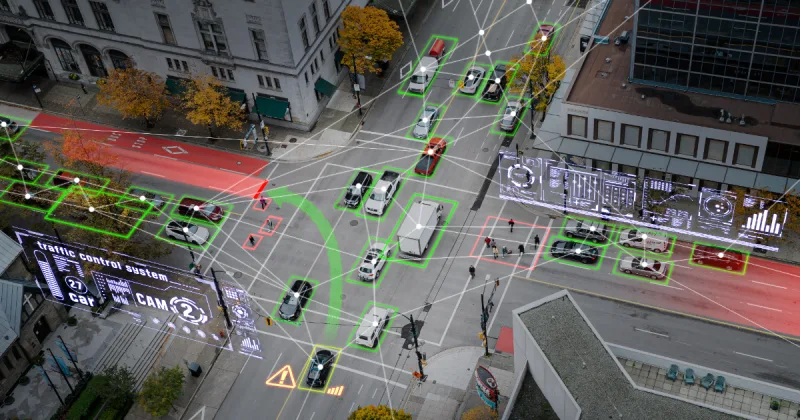
The development of autonomous vehicles (AVs) extends beyond artificial intelligence algorithms to critical engineering challenges in real-time computing. A primary focus for software architects is managing system latency—the delay between sensor input and vehicle response—which is paramount for safety. Engineers must optimize complex software stacks to process terabytes of sensor data per hour within strict power and thermal constraints of onboard hardware.
Industry leaders like Waymo and Cruise have highlighted that achieving robust performance requires balancing high-level perception with low-level control systems. This involves sophisticated optimization techniques to ensure computational tasks are completed within deterministic time frames, a necessity for navigating unpredictable real-world environments. The shift is from theoretical capability to practical, reliable engineering.
Recent advancements, such as more efficient neural network architectures and specialized processors, aim to reduce latency. However, experts note that integrating these innovations into a cohesive, safety-certified system remains a significant hurdle. The path to widespread AV adoption is increasingly defined by solving these foundational engineering problems of speed and reliability.