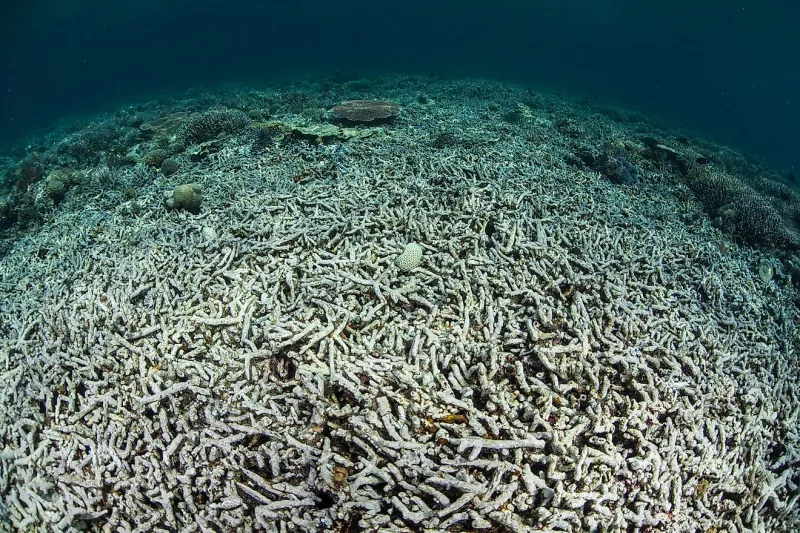
Ocean acidification refers to the long-term decrease in seawater pH, primarily caused by the ocean absorbing excess carbon dioxide from the atmosphere. According to the National Oceanic and Atmospheric Administration (NOAA), since the Industrial Revolution began around 1750, the average pH of the ocean's surface has dropped from approximately 8.2 to 8.04, representing a 30% increase in acidity.
This chemical change occurs because CO2 reacts with seawater to form carbonic acid, which releases hydrogen ions and lowers pH. NOAA data confirms that the current rate of acidification is unprecedented in at least 300 million years, threatening marine ecosystems, particularly organisms with calcium carbonate shells or skeletons, such as corals, oysters, and plankton.
Scientific projections indicate that if CO2 emissions continue at current levels, surface ocean pH could decline by an additional 0.3 to 0.4 units by the end of this century. This would severely impact marine food webs and fisheries that billions of people rely on for protein.
International efforts, including the Paris Agreement, aim to limit global warming and indirectly reduce CO2 absorption by oceans, but direct mitigation of acidification remains a challenge. Monitoring by NOAA and other agencies continues to track pH changes globally.