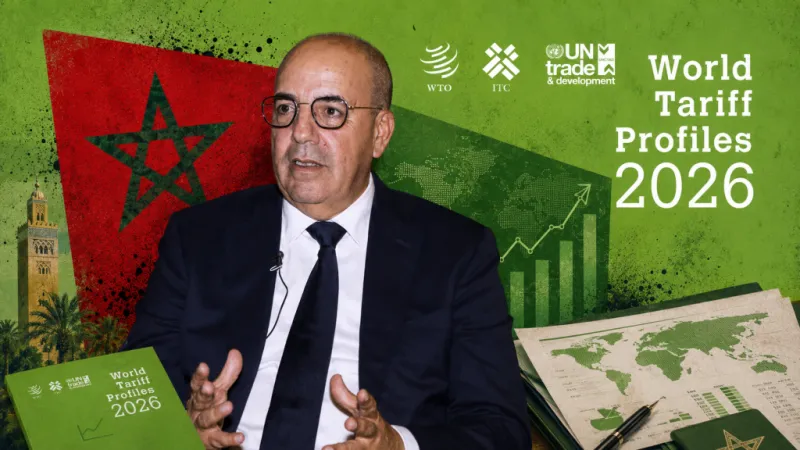
According to the 2026 edition of the World Tariff Profiles published by the World Trade Organization (WTO), Morocco maintains a tariff structure that imposes the highest barriers on agricultural products while providing more favorable access for industrial equipment and inputs. The report, released in 2026, details the country's trade policy as of the latest available data.
The data shows that Morocco's average applied tariff on agricultural products is significantly higher than on non-agricultural goods. This structure aims to protect domestic agricultural production while facilitating the import of machinery and raw materials needed for industrial sectors. The WTO report notes that this approach is common among developing economies seeking to balance food security with industrial development.
Regarding exports, the WTO document indicates that the majority of Morocco's non-agricultural exports are destined for the European Union, reflecting the deep trade integration under the EU-Morocco Association Agreement. The EU remains Morocco's largest trading partner, accounting for over 60% of its total trade.
The World Tariff Profiles 2026 is a joint publication of the WTO, the International Trade Centre (ITC), and the United Nations Conference on Trade and Development (UNCTAD), providing comprehensive tariff data for over 170 countries.