Morocco's 'Made in Morocco' initiative aims to strengthen industrial sovereignty by promoting local production. However, experts argue that producing locally does not automatically grant decision-making power over key aspects like design, technology, and market access. A 2025 report by the Moroccan Ministry of Industry highlighted that while local manufacturing has increased by 15% since 2020, foreign firms still control 70% of high-value activities in sectors like automotive and aerospace.
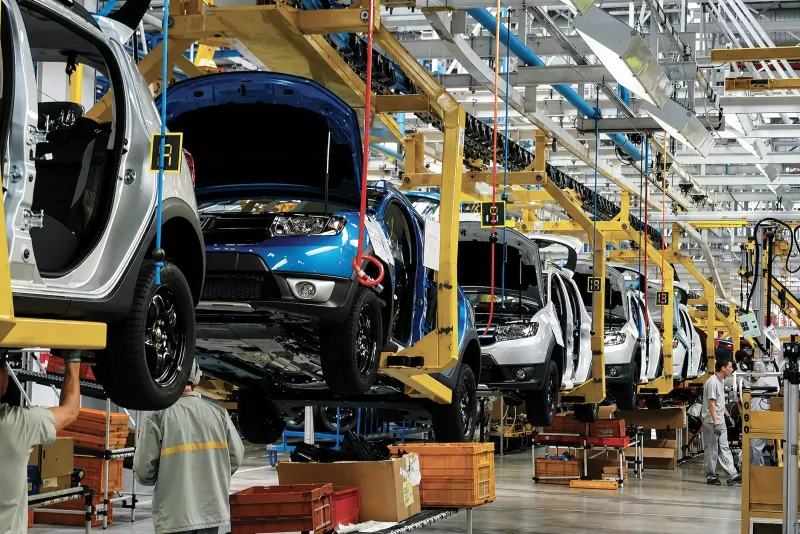
The concept of industrial sovereignty involves not just manufacturing but also controlling the entire value chain, including research, development, and strategic decisions. In Morocco, many factories operate as subcontractors for international companies, limiting local autonomy. For instance, in the automotive sector, which accounts for 25% of Morocco's exports, most design and R&D remain abroad, according to a 2024 study by the Policy Center for the New South.
To address this, the Moroccan government launched the 'Sovereignty Industries' program in 2023, focusing on sectors like pharmaceuticals, electronics, and renewable energy. The program aims to increase local value addition to 50% by 2030, up from the current 35%. However, challenges persist, including a skills gap and limited access to financing for local firms.
Critics argue that true sovereignty requires more than just assembly lines. 'We need to move from being a production hub to a decision hub,' said Dr. Amina Benkhadra, an economist at Mohammed V University, in a 2025 interview. 'This means investing in education, innovation, and local entrepreneurship.' The debate continues as Morocco balances attracting foreign investment with building independent industrial capacity.