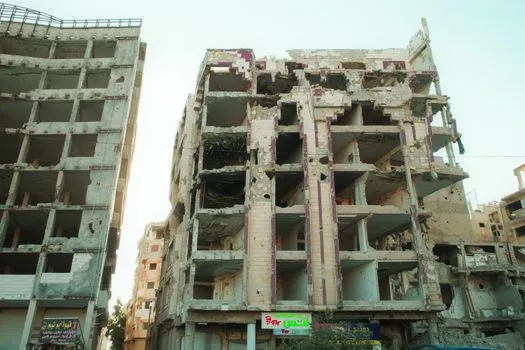
The ongoing conflict in the Middle East, particularly the Israel-Hamas war that began in October 2023, continues to pose significant risks to the economic trajectory of the Middle East and North Africa (MENA) region. According to the International Monetary Fund (IMF) and World Bank reports from early 2026, the conflict has disrupted trade routes, increased fiscal deficits, and dampened investor confidence in several neighboring economies.
Key economic indicators show that countries like Lebanon, Jordan, and Egypt have experienced reduced tourism revenues and higher energy costs. The IMF's Regional Economic Outlook for the Middle East and Central Asia, updated in April 2026, projected a slower growth rate of 2.5% for the MENA region in 2026, down from earlier estimates of 3.2%, largely due to the spillover effects of the conflict.
Additionally, the conflict has exacerbated existing challenges such as high unemployment and inflation. The World Bank reported in May 2026 that food price inflation in the region remains elevated, particularly in conflict-affected areas, threatening food security for millions. The situation is further complicated by geopolitical tensions that have disrupted shipping in the Red Sea, impacting global supply chains.
Despite these challenges, some oil-exporting countries in the Gulf Cooperation Council (GCC) have maintained relatively stable growth, supported by high oil prices and diversification efforts. However, the overall outlook remains uncertain, with the IMF warning that a prolonged conflict could lead to more severe economic consequences for the entire region.