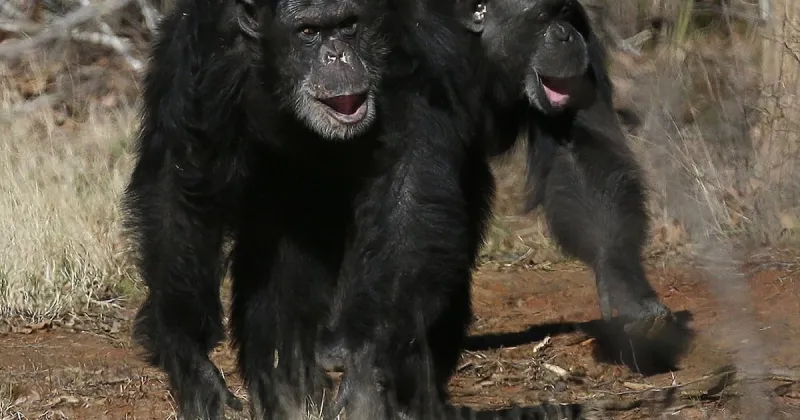
A study published in the journal Current Biology on June 4, 2026, suggests that laughter in humans and great apes shares similar acoustic patterns, indicating a common evolutionary origin. Researchers from the University of California, Los Angeles, and other institutions tickled 13 captive apes, including gorillas, orangutans, chimpanzees, and bonobos, to record their vocalizations.
The analysis showed that the laughter of these apes, when tickled, exhibited rhythmic patterns and pitch variations comparable to human laughter. The study, led by Dr. Marina Davila-Ross, found that the acoustic structure of ape laughter is more similar to human laughter than previously thought, supporting the idea that laughter evolved before the divergence of the human lineage from other great apes.
This research builds on earlier work from 2009 that first documented tickle-induced laughter in apes. The new findings provide stronger evidence for the evolutionary continuity of laughter across species, with implications for understanding the origins of human social bonding and communication.