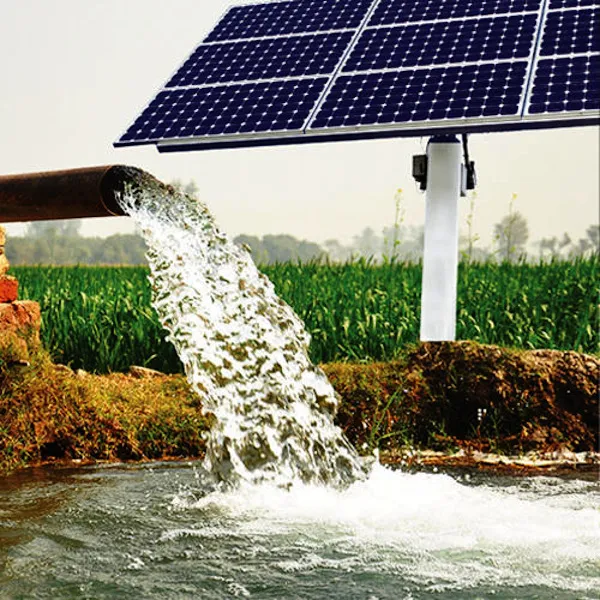
India's innovative solar-powered irrigation model, which has helped farmers reduce electricity costs and carbon emissions, is being considered as a potential blueprint for enhancing food security in Africa. The model, known as 'solar irrigation as a service,' allows farmers to access solar pumps without upfront costs, paying only for the water used.
According to a 2025 report by the International Energy Agency, India has installed over 300,000 solar irrigation pumps, saving farmers an estimated $1.2 billion annually in energy costs. The model has also reduced greenhouse gas emissions by approximately 4 million tons per year. African nations, facing similar challenges of high energy costs and unreliable grid access, are exploring partnerships with Indian firms to replicate this success.
In 2026, the African Development Bank announced a $500 million initiative to support solar irrigation projects in 10 African countries, inspired by India's approach. The initiative aims to provide clean energy to 2 million smallholder farmers by 2030, potentially increasing crop yields by 20-30%.