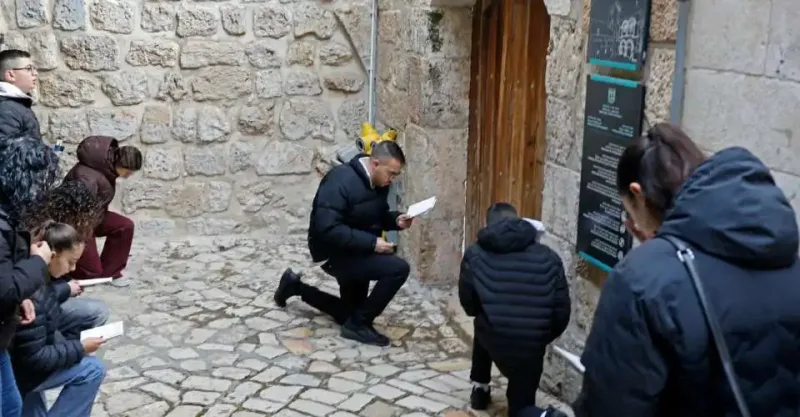
Holy Week observances in Jerusalem proceeded in 2026 under a heavy security presence and with significantly reduced pilgrim numbers due to the ongoing Israel-Hamas conflict. The traditional Palm Sunday procession from Bethphage to the Old City, which typically draws thousands, saw only a few hundred participants, primarily local Christians, according to reports from church officials and news agencies.
Authorities imposed strict security measures around the Church of the Holy Sepulchre, the site revered as the location of Jesus's crucifixion and resurrection. Access was controlled, and the atmosphere was described as somber and tense, contrasting with the usual festive pilgrimages. The Latin Patriarch of Jerusalem, Cardinal Pierbattista Pizzaballa, led services, emphasizing prayers for peace and the victims of the war.
The conflict, which began with Hamas's attack on Israel on October 7, 2023, and the subsequent Israeli military campaign in Gaza, has severely impacted travel and tourism. The Israeli Tourism Ministry reported pilgrim numbers for the 2026 Easter season remained at a fraction of pre-war levels. Church leaders noted the continued absence of international pilgrim groups, which are vital to the local Christian economy and community.
Despite the subdued atmosphere, core religious ceremonies, including the Holy Fire ceremony at the Holy Sepulchre and the Way of the Cross along the Via Dolorosa, were conducted. Participants and clergy reported a profound sense of mourning, intertwining the Passion narrative with prayers for an end to the violence and suffering in the region.