A new study led by researchers at The University of Texas MD Anderson Cancer Center found that adults who have survived Hodgkin lymphoma (HL) for at least five years face a significantly elevated risk of death compared to the average American adult. The retrospective, population-based analysis was published in the journal JAMA Oncology on August 15, 2026.
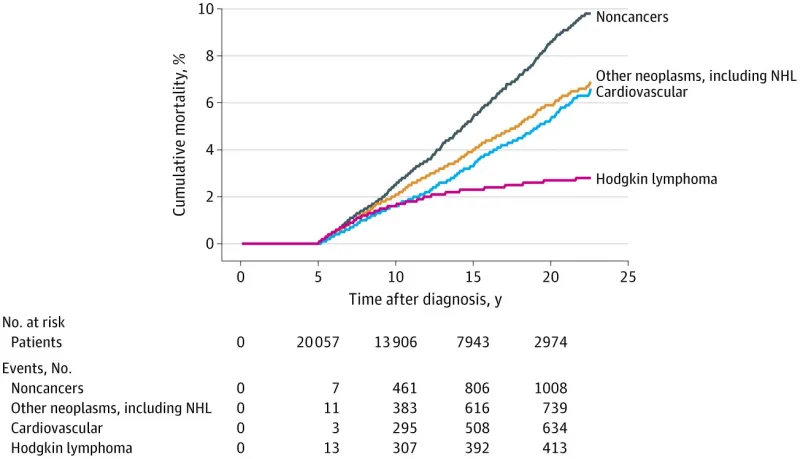
The study analyzed data from the Surveillance, Epidemiology, and End Results (SEER) database, covering more than 20,000 five-year survivors of Hodgkin lymphoma diagnosed between 1975 and 2020. The researchers found that the overall mortality rate among these survivors was more than twice that of the general U.S. population, with a standardized mortality ratio (SMR) of 2.1.
Cardiovascular disease and second primary cancers were the leading causes of death among survivors, each accounting for about 25% of all deaths. The risk of death from these causes remained elevated for decades after the initial diagnosis, highlighting the need for long-term follow-up care.
"Our findings underscore the importance of ongoing surveillance and preventive care for Hodgkin lymphoma survivors," said Dr. Sharon Smith, the study's lead author and an assistant professor of radiation oncology at MD Anderson. "Even after five years, these patients face substantial health risks that require coordinated, multidisciplinary management."
The study also identified that survivors treated with older radiation therapy techniques had higher risks of late effects, while those treated with modern approaches had lower risks. The authors emphasize that newer treatment strategies, such as reduced-field radiation and targeted therapies, may help mitigate these long-term risks.