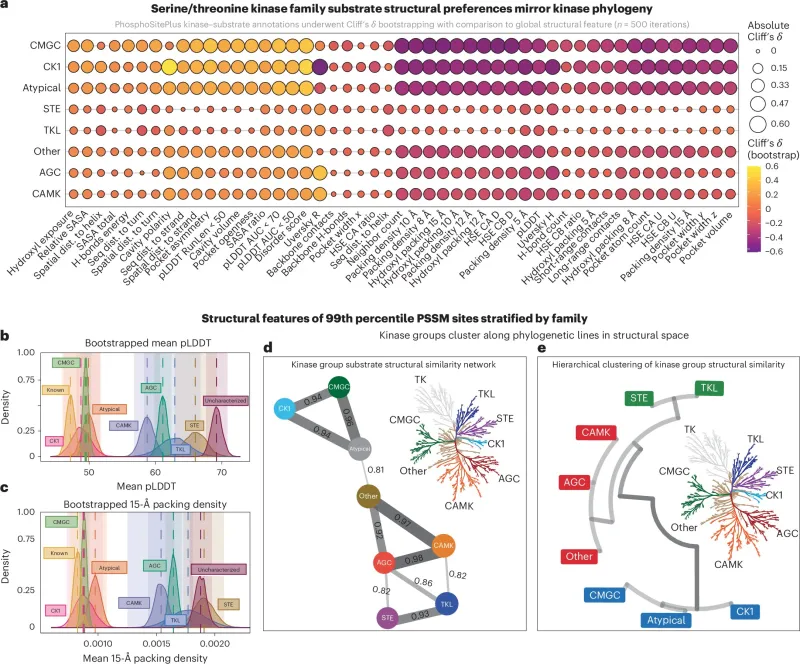
Researchers have developed a comprehensive 3D map of phosphorylation sites on human proteins, which could help identify which kinases are active in specific cancers. The map covers 1.8 million sites, offering a detailed view of cell signaling pathways.
The study, published in Nature, used advanced computational methods to predict the 3D structures of these sites. This allows scientists to see how kinases interact with their targets, potentially revealing new drug targets.
Kinases are enzymes that add phosphate groups to proteins, a process called phosphorylation, which regulates many cellular functions. In cancer, abnormal kinase activity can drive uncontrolled cell growth and spread. Knowing exactly which kinases are active in a tumor is crucial for choosing effective treatments.
The new map could help doctors personalize cancer therapy by matching patients with drugs that target the specific kinases driving their disease. It may also aid in developing new kinase inhibitors.