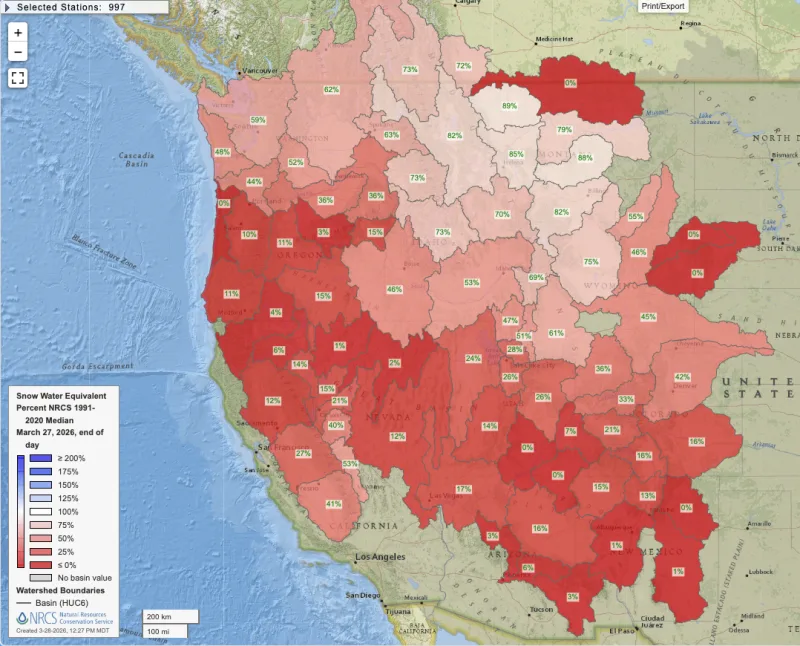
A historic and unprecedented heatwave that gripped the U.S. Southwest throughout March 2026 is finally subsiding. According to data from the National Oceanic and Atmospheric Administration (NOAA) and the National Weather Service (NWS), numerous locations experienced their warmest March on record, with temperatures soaring 15 to 25 degrees Fahrenheit above average for prolonged periods. Climate scientists have described the event as one of the most extreme and anomalous temperature departures ever observed for the month.
The prolonged heat exacerbated drought conditions and elevated wildfire risks across the region. Phoenix, Arizona, for example, recorded its earliest 100-degree Fahrenheit day in history on March 15, 2026, breaking the previous record by nearly two weeks, as verified by NWS Phoenix records.
Forecast models from NOAA's Climate Prediction Center indicate that a shift in the weather pattern will bring a brief period of cooler and potentially wetter conditions to the western United States in early April. This interlude is expected to provide temporary relief from the intense heat and dryness.
However, the longer-range seasonal outlook suggests that above-average temperatures and below-average precipitation are likely to return to the region later in the spring and into the summer. This aligns with ongoing trends linked to climate change, which increase the frequency and intensity of such extreme heat events.