To transmit excitatory signals, nerve cells primarily use glutamate as a neurotransmitter. To detect these signals, cells rely on a repertoire of receptors with different signaling properties. Researchers at the Chair of Cellular Neurobiology at the University of Göttingen have now discovered a hidden molecular switch that enables two of the four subunits of an ion channel to open it, a finding that could reshape understanding of synaptic transmission.
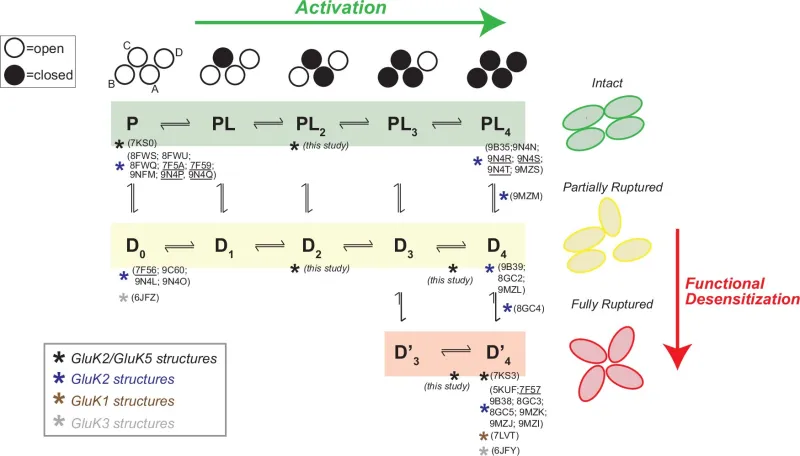
The study, published in Nature Communications on June 12, 2026, focused on AMPA-type glutamate receptors, which are key to fast synaptic transmission in the brain. These receptors are typically composed of four subunits, and it was previously thought that all four must be activated for the channel to open. The team, led by Professor Dr. Michael Hörner, identified a specific structural motif in the receptor's ligand-binding domain that acts as a switch, allowing just two subunits to trigger channel opening under certain conditions.
Using cryo-electron microscopy and electrophysiology, the researchers observed that when this switch is in a particular conformation, the receptor can open with only two bound glutamate molecules. This mechanism may allow neurons to fine-tune their response to neurotransmitter release, potentially affecting learning and memory processes. The discovery also suggests new targets for drugs aimed at neurological disorders where glutamate signaling is disrupted, such as epilepsy or Alzheimer's disease.
Professor Hörner stated, 'This hidden switch gives the receptor a flexibility we didn't know existed. It could explain how neurons achieve such precise control over synaptic strength.' The team plans to investigate whether similar switches exist in other ion channels and how this mechanism influences brain function in health and disease.