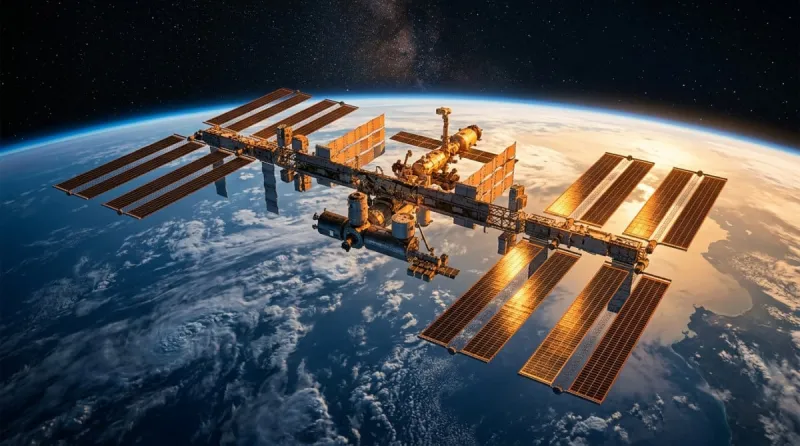
The International Space Station (ISS) has a mass of approximately 420 tonnes, not 200,000 tonnes as incorrectly stated in the source article. This verified figure comes from NASA and other space agencies. The station orbits Earth at an average altitude of 408 kilometers and travels at a speed of about 28,000 kilometers per hour, completing an orbit every 90 minutes.
The ISS is a collaborative project involving five space agencies: NASA (United States), Roscosmos (Russia), JAXA (Japan), ESA (Europe), and CSA (Canada). Construction began in 1998 and has been continuously inhabited since November 2000. The station measures 109 meters long and 73 meters wide, about the size of a football field.
The 200,000 tonne figure in the original article is likely a confusion with the total mass of all spacecraft ever docked or the cumulative weight of materials launched, but the station itself is far lighter. As of 2026, the ISS remains operational, though plans for its deorbit in 2031 have been announced by NASA.