Researchers at the University of California, Riverside, have developed a gene therapy that restored normal brain activity and improved behavior in a mouse model of fragile X syndrome (FXS), according to a study published in the journal Science Advances on June 17, 2026. The therapy delivers a functional copy of the FMR1 gene, which is silenced in FXS, leading to production of the missing FMRP protein.
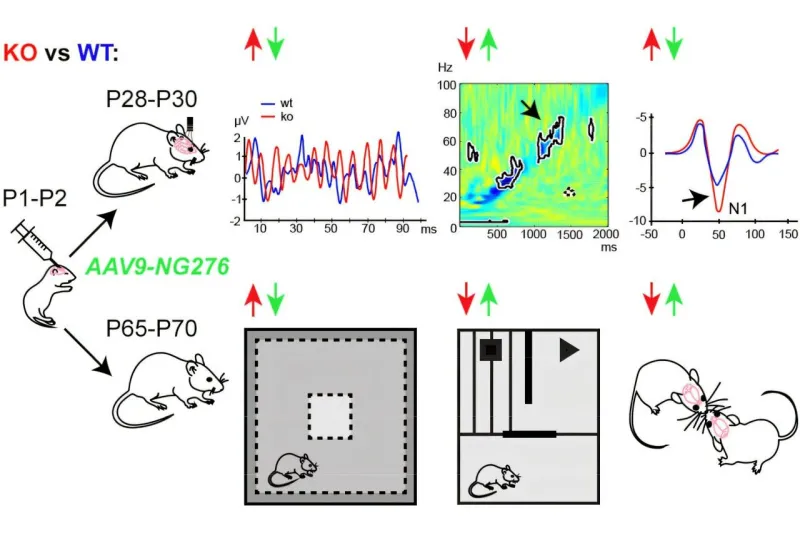
In the study, led by Dr. Iryna Ethell, a single injection of the gene therapy vector into the brains of young adult FXS mice resulted in increased FMRP levels in key brain regions, including the hippocampus and cortex. Treated mice showed normalized synaptic plasticity and reduced repetitive behaviors, as well as improved social interaction and learning in maze tests.
The researchers used an adeno-associated virus (AAV) vector to deliver the gene, and observed no significant adverse effects over a six-month follow-up period. The therapy was effective when administered at four weeks of age, corresponding to adolescence in mice, but not when given later, suggesting a critical window for intervention.
Dr. Ethell noted that while the results are promising, further studies are needed to assess safety and efficacy in larger animals before human clinical trials can be considered. Fragile X syndrome is the most common inherited cause of intellectual disability and autism, affecting about 1 in 4,000 males and 1 in 8,000 females worldwide.