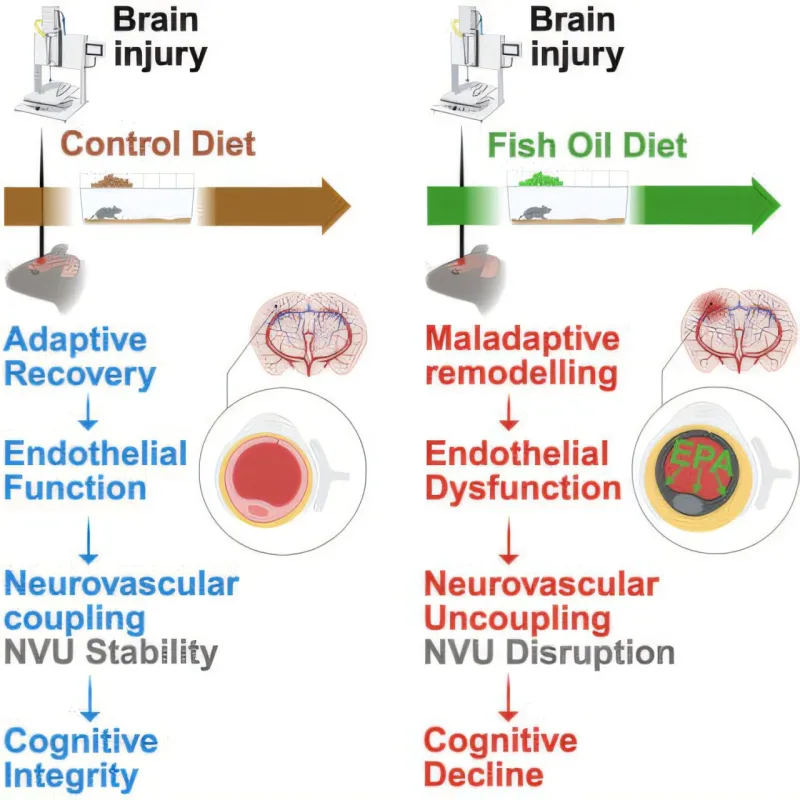
A new study led by researchers at the Medical University of South Carolina (MUSC) is challenging the long-held belief that fish oil supplements can help protect or heal the brain following repetitive mild traumatic brain injuries (rmTBIs). The findings, published in the peer-reviewed journal Cell Reports, suggest that omega-3 fatty acids found in fish oil may not provide the neuroprotective benefits many had hoped for in this specific context.
The research team investigated the effects of fish oil supplementation on animal models subjected to repetitive mild traumatic brain injuries — the type commonly associated with contact sports, military service, and certain occupational hazards. Despite fish oil's well-documented anti-inflammatory properties and its popularity as a dietary supplement for general brain health, the study found that supplementation did not significantly improve outcomes for subjects with this type of repeated head trauma.
The study is described as a first-of-its-kind investigation into this specific combination of repetitive mild TBI and fish oil supplementation. Researchers noted that while omega-3 fatty acids have shown promise in other neurological contexts, the mechanisms at play in repetitive mild brain injuries may differ substantially, potentially explaining why the supplements failed to demonstrate a clear benefit in this model.
The findings carry significant implications for athletes, military personnel, and others at elevated risk of repetitive head impacts who may be taking fish oil supplements with the expectation of brain protection. Experts caution that while fish oil remains beneficial for cardiovascular and general health, people should not rely on it as a preventive or therapeutic measure specifically for mild traumatic brain injuries. Further human clinical trials will be needed to confirm these findings and explore alternative protective strategies.