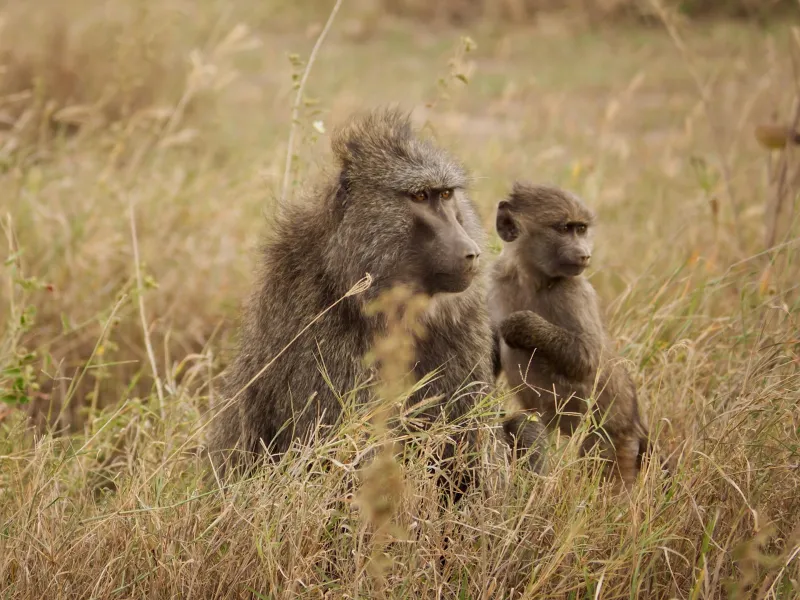
Baboons, among the most widespread primates in Africa, range across sub-Saharan Africa and into the Arabian Peninsula. Their ecological adaptability has enabled them to thrive in diverse habitats, from savannas to forests.
Recent research highlights the crucial role of female baboons in maintaining family bonds. Studies, such as those from the Amboseli Baboon Research Project in Kenya, have shown that female baboons form strong, enduring relationships with female relatives, which contribute to group cohesion and infant survival rates.
These bonds are not merely social; they have tangible benefits. Female baboons with close kin networks experience lower stress levels and higher reproductive success, as documented in peer-reviewed journals like Proceedings of the Royal Society B. The research underscores how these relationships help baboons navigate complex social hierarchies and environmental challenges.
Understanding these dynamics offers insights into primate social evolution and the importance of female social bonds in animal societies.