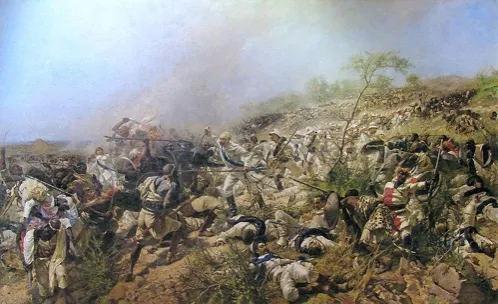
The Battle of Adwa in 1896, where Ethiopian forces defeated an invading Italian army, remains a potent national symbol of unity. Historical accounts, including those from the Institute of Ethiopian Studies, note that forces from various ethnicities, including Amhara, Oromo, and Tigrayan groups, fought under Emperor Menelik II. This victory preserved Ethiopia's sovereignty during the colonial Scramble for Africa.
In contrast, modern Ethiopia is governed under a system of ethnic federalism, established by the 1995 constitution following the fall of the Derg regime. This system organizes the country into regional states largely based on ethnic identity, such as Amhara, Oromia, Tigray, and the Southern Nations, Nationalities, and Peoples' Region (SNNPR). Proponents argue it grants self-determination, but critics link it to inter-ethnic violence and political fragmentation.
The system has been tested by severe conflicts, notably the two-year Tigray War (2020-2022) that caused a humanitarian crisis. Recent years have seen other ethnic clashes, including in the Oromia and Amhara regions. As of 2026, the government continues to navigate tensions between centralized authority and regional autonomy, with debates on constitutional reform ongoing.
Analysts from institutions like the International Crisis Group describe Ethiopia's political landscape as deeply contested, where the legacy of Adwa's unified nationalism coexists uneasily with the realities of ethnic federalism. The path forward involves balancing these historical narratives with contemporary governance challenges.