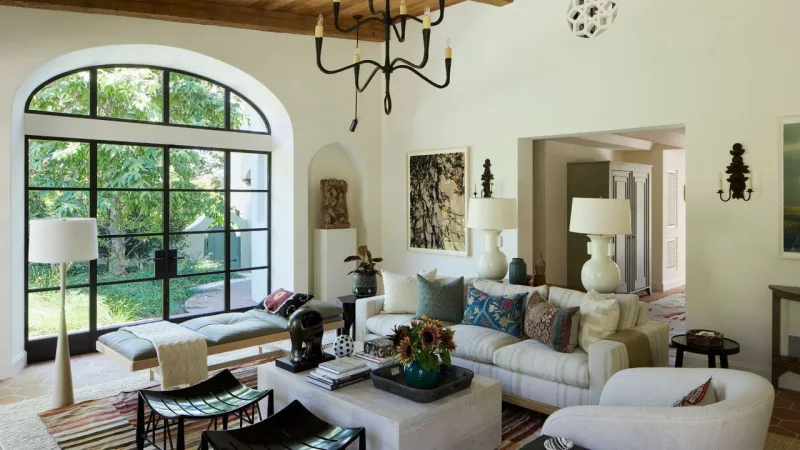
A growing trend in interior design sees professionals and enthusiasts moving beyond the strict 'minimalist grid'—a layout characterized by perfect symmetry and sparse, matching furnishings. Critics argue this approach can create rooms that feel sterile, flat, and lacking in personal narrative. The core critique, verified through contemporary design publications and expert commentary, is that an over-reliance on symmetry and matching sets can suppress visual interest and emotional resonance in a space.
In response, designers are advocating for a principle of 'curated asymmetry.' This involves intentionally arranging furniture, art, and decor off-center or in unbalanced yet harmonious groupings. The goal is to create a more dynamic visual flow that guides the eye around the room, adding depth, movement, and a sense of collected individuality. This shift is part of a broader movement towards 'warm minimalism' and 'maximalism,' which prioritize personality and comfort alongside clean lines.
The practical advice from experts is to start with a focal point, like a fireplace or a statement piece of art, and arrange seating in a conversational grouping rather than rigidly against walls. Mixing textures, scales, and periods of furniture is encouraged to break monotony. Importantly, this is not a call for clutter, but for intentional, layered design that tells a story and makes a space feel authentically lived-in, moving beyond the potentially impersonal feel of a perfectly symmetrical layout.