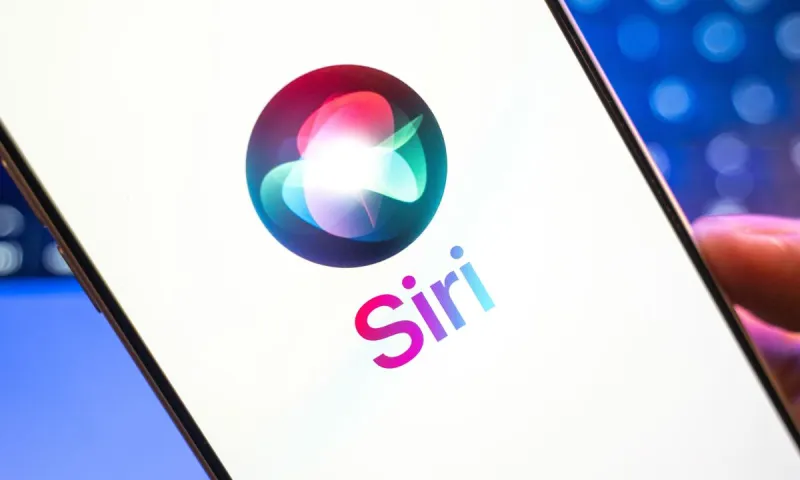
At the Worldwide Developers Conference (WWDC) on June 8, 2026, Apple unveiled a major update to its virtual assistant Siri, integrating advanced artificial intelligence capabilities. The new Siri, powered by a large language model, promises to offer 'broad world knowledge for up-to-date answers on virtually any topic,' along with onscreen awareness and personal context understanding, as stated by Craig Federighi, Apple's senior vice president of Software Engineering.
Despite the ambitious announcement, the market response was tepid. Apple's stock (AAPL) fell by 1.2% in after-hours trading on June 8, closing at $198.45, as investors expressed concerns about the company's pace in the AI race compared to competitors like Google and Microsoft. Analysts noted that while the features are significant, they may not be enough to drive immediate revenue growth.
The new Siri is expected to roll out with iOS 20 and macOS 16 later this year, offering deeper integration with third-party apps and improved natural language processing. However, some tech commentators questioned whether the updates are truly revolutionary or merely catching up to existing AI assistants.